How to run a sale: a marketing campaign across email, WhatsApp and SMS
A step-by-step plan for running a sale across email, WhatsApp and SMS: the offer, the audience, a 7-day timeline, message templates and what to measure.


- A good sale is a short marketing campaign with one offer, one deadline and a clear job for each channel. Email explains the offer, WhatsApp starts conversations with people who opted in, and SMS carries short reminders. Plan the days in advance, write every message before launch, and measure sales, not opens.
A sale works best when you treat it as a short marketing campaign, not a single announcement. That means one clear offer, a fixed start and end date, and a plan for who hears about it, on which channel, and when. Email carries the full story, WhatsApp gets the fastest replies from people who asked to hear from you, and SMS is a short nudge that lands even without data.
This guide walks you through the whole thing: choosing an offer, getting permission right, giving each channel a job, a day-by-day timeline you can copy, message templates, and how to tell whether it worked. It suits a salon running a holiday promo, a clothing seller clearing stock, or a consultant filling next month’s calendar.
What a sale marketing campaign needs before you write anything
Most sales fail quietly because they were decided on the morning they launched. Before you write a single message, settle five things on one page.
- The offer. What exactly is discounted, by how much, and for whom.
- The dates. When it starts, when it ends, and the exact time it ends (with a time zone).
- The audience. Which groups of people you will contact, and whether they agreed to hear from you.
- The channels. What email, WhatsApp and SMS will each do.
- The goal. A number you want to hit, such as 40 orders or 15 new bookings.
Write the goal down. Without it you will judge the campaign on how busy you felt, which is a poor measure.
Step 1: pick an offer people will act on
The offer is the whole campaign. Clever copy can’t rescue a weak one, and a strong one needs very little dressing up.
Common sale offers and when they suit
| Offer type | Example | Works well for |
|---|---|---|
| Percentage off | 20% off all braiding styles this week | Services and products with healthy margins |
| Fixed amount off | ₦5,000 off orders over ₦30,000 | Raising the average order value |
| Bundle | Logo and business card design together for one price | Selling a second item people would not buy alone |
| Free extra | Free delivery in Lagos until Sunday | Removing the thing that stops people buying |
| Early access | Past customers shop the new range a day early | Rewarding loyal customers without cutting price |
Check the maths before you promise anything
A discount comes straight off your profit, not your price. If a product costs you ₦6,000 to make and sells for ₦10,000, a 20% discount cuts your profit from ₦4,000 to ₦2,000. You need to sell twice as many just to earn the same. Run your numbers through a profit margin calculator first, and set a floor you won’t go below.
Keep the urgency honest
A real deadline helps people decide. A fake one damages trust, and in some countries it breaks consumer law. The UK competition regulator, for example, lists pressure selling through false urgency and misleading price reductions among its enforcement priorities in its guidance on unfair commercial practices. The simple rule: if you say the sale ends on Sunday, end it on Sunday, and only show a “was” price you actually charged.
Step 2: get your audience and permission right
Your list decides your results more than your wording does. Split the people you know into three groups, because they need different messages.
- Past customers. They already trust you. They respond best to early access and a thank-you tone.
- Leads who never bought. They were interested but something stopped them. The sale may be the push they need.
- Quiet contacts. People who haven’t opened or replied in months. Contact them last and lightly, or leave them out.
Permission rules by channel
Each channel has its own rules, and breaking them can get your number or domain blocked.
- WhatsApp: the WhatsApp Business Messaging Policy says you may only message people who gave you their number and opted in to hear from you, and you must respect every request to stop.
- SMS in Nigeria: subscribers can block promotional texts by sending STOP to 2442, the Do-Not-Disturb service run by the NCC. Numbers on DND won’t receive your promotional SMS, so don’t count them in your reach.
- Email: Gmail’s sender guidelines require bulk senders to authenticate their domain and offer one-click unsubscribe. In the US, the CAN-SPAM Act also requires a postal address and honouring opt-outs within 10 business days.
- Personal data: Nigeria’s Data Protection Act 2023, overseen by the NDPC, expects consent to be freely given, specific and easy to withdraw, and gives people the right to object to direct marketing.
This is general information, not legal advice. If you’re unsure, check with the regulator or a lawyer in your country.
Step 3: give each channel one job
Sending the same text on every channel annoys people who follow you on all three. Give each channel a job that fits how people use it.
| Channel | Its job in the sale | Length | Watch out for |
|---|---|---|---|
| Explain the offer fully, show products, link to the page | Short to medium, one clear button | Subject lines that feel like spam, missing unsubscribe link | |
| Personal launch message and replies to questions | 2 to 4 short lines | Only opted-in contacts, template approval by Meta first | |
| SMS | Reminder and last-chance nudge | Under 160 characters | Emoji shorten the limit, DND numbers won’t receive it |
Two points about costs. On WhatsApp, Meta now charges per delivered template message, with rates set by message category and the recipient’s country, according to its WhatsApp Business Platform pricing. Marketing templates are always charged. On SMS, one message holds 160 standard characters, but a single emoji switches the whole text to a different encoding with only 70 characters per message, as Twilio’s guide to SMS limits explains. Leave the emoji for WhatsApp.
Not sure which channel matters most for your customers? Our comparison of WhatsApp and SMS marketing goes deeper.
Step 4: plan the timeline day by day
A 7-day sale is long enough to reach people who missed the first message and short enough to feel urgent. Here’s a timeline you can copy and adjust.
| Day | SMS | ||
|---|---|---|---|
| Day -2 | Teaser to past customers: “something is coming on Friday” | Nothing | Nothing |
| Day -1 | Early access for past customers | Early access message to opted-in customers | Nothing |
| Day 1 | Launch email to everyone on the list | Launch message to opted-in contacts | Nothing |
| Day 3 | Resend to people who didn’t open, with a new subject | Reply to questions only | Short reminder to opted-in numbers |
| Day 5 | “Most popular so far” email with social proof you can back up | Reply to questions only | Nothing |
| Day 7 morning | “Ends tonight” email | Last-chance message | Last-chance text |
| Day 8 | Thank-you email to buyers | Thank-you to buyers who chatted with you | Nothing |
If your sale is shorter, say a 48-hour flash sale, squeeze the same shape into two days: early access the evening before, a launch message, and one last-chance reminder a few hours before the end. Notice how quiet the plan is. Most people get three or four messages across the week, not twelve. Put the dates into a shared content calendar so everyone on your team knows what goes out when.
Step 5: write every message before the sale starts
Write the whole set in one sitting, then schedule it. You’ll be busy answering customers once the sale is live, and that’s when rushed messages go out with the wrong date.
Launch email template
Subject: 20% off every braiding style, until Sunday
Preview text: Book any style this week and save.Hi {{first_name}},
From today until Sunday at 8pm, every braiding style at Adunni Hair Studio is 20% off. Knotless, cornrows, twists: all of them.
Slots on Saturday go fastest, so book early if that’s your day.
[Book your slot]
See you soon,
Adunni
One offer, one deadline, one button. Write the subject line last: it should name the offer and the deadline in plain words, with no tricks, because the people most likely to buy are scanning their inbox for exactly that.
WhatsApp marketing template
Hi {{1}}, our 20% off sale is live until Sunday 8pm. Every braiding style is included. Tap below to book, or reply here with any questions.
[Book now] [Ask a question]
Template messages need Meta’s approval before you can send them, so submit yours a few days before launch. For more examples that get replies, see our WhatsApp message templates.
SMS reminder
Hi {first_name}, 20% off all braids ends Sunday 8pm. Book: yourpage.com/braids Reply STOP to opt out
That’s well under 160 characters, uses no emoji, names the business offer and deadline, and gives a way out.
Step 6: send everyone to one place to buy
Every message should point to the same destination: a page with the offer, the deadline and a way to pay or book. Don’t send people to your home page and hope they find the sale.
- For products: a sale page listing the discounted items, with a payment link or checkout.
- For services: a page with the offer and a booking button that shows open slots.
- For high-value work: a short form so people can ask for a quote at the sale price.
Keep the page short. Headline with the offer, one line on who it’s for, what’s included, the deadline, and the button. Test it on a phone before launch, because most people will tap through from WhatsApp or a text message on their mobile.
Step 7: measure what matters and follow up
Opens and clicks tell you whether people noticed. Sales tell you whether the campaign worked. Track both, but judge the sale on the second.
Numbers to check each day
- Orders or bookings against your goal.
- Revenue, minus the discount you gave away.
- Replies and questions on WhatsApp. Lots of the same question means your message is unclear.
- Unsubscribes and opt-outs. A spike means you’re sending too often or to the wrong people.
After the sale ends
- Thank everyone who bought, and ask one of them for a review.
- Tag buyers so you can offer them early access next time.
- Write three lines: what worked, what didn’t, what you’ll change. Keep them with the campaign so your next marketing campaign starts from what you learned, not from scratch.
- Stop the sale on time. Take down the page or change the price back.
Common marketing campaign mistakes to avoid
These are the slips that most often turn a promising sale into a flat week.
- Messaging people who never opted in. It risks your WhatsApp quality rating, your email delivery and your reputation.
- Too many messages. Three well-timed messages beat ten repeats.
- Extending the deadline. Do it once and customers learn to wait for the next “final” day.
- No stock or capacity check. Selling 60 slots when you can deliver 30 turns a good week into a bad month.
- Forgetting the people who already paid full price last week. A small thank-you gesture goes a long way.
How startbuddi helps you run a sale campaign
In startbuddi, Campaigns is the place to plan a sale like this. You can start from the “Seasonal promotion” plan, set the objective to “Drive sales”, pick your dates and choose the channels to include. The email campaign, WhatsApp campaign, landing page and form all sit inside the one campaign as its assets, and the calendar shows every send and milestone on one screen.
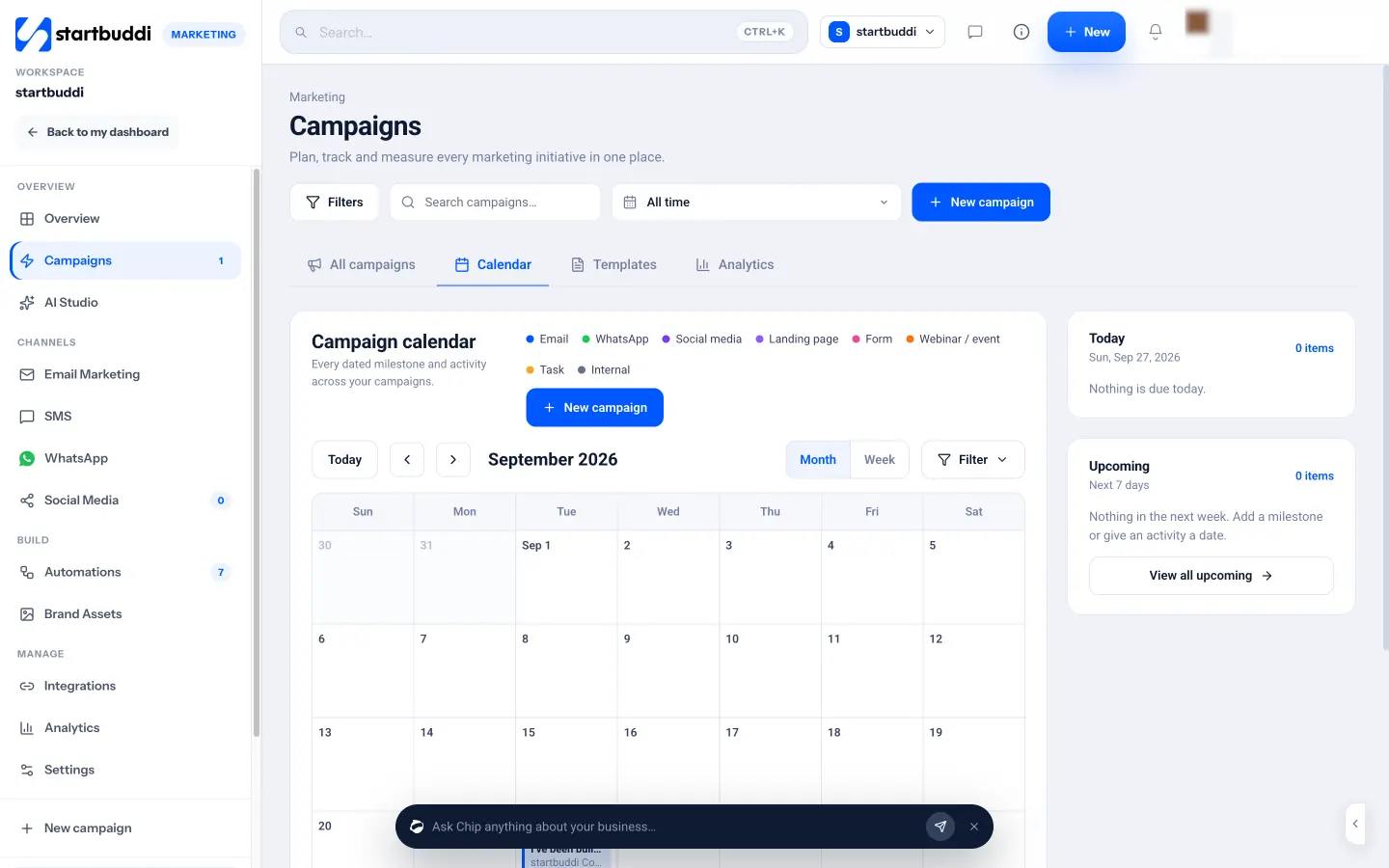
You can set goals on live numbers, such as revenue influenced or bookings, and progress fills in by itself. When someone the campaign reached pays an invoice in Money Manager, that revenue is credited back to the campaign, split across channels by the attribution model you choose.
Each channel has its own tools:
- Email marketing: seasonal template collections (including Black Friday and Independence Day), merge tags like first name, A/B testing on subject lines, and “Resend to non-openers” with a new subject, once per campaign. The unsubscribe link and your business address are added to every send automatically.
- WhatsApp marketing: write a template and send it to Meta for review, then send it in five steps: audience, template, personalise, schedule, review. Marketing templates only go to contacts marked as opted in, and replies land in your shared inbox.
- SMS marketing: write the text with a live phone preview and segment counter, add merge tags, and send now or schedule. Replies of STOP, UNSUBSCRIBE, CANCEL, END or QUIT take people off your SMS list. SMS is sent from the SMS screen rather than inside the Campaigns plan.
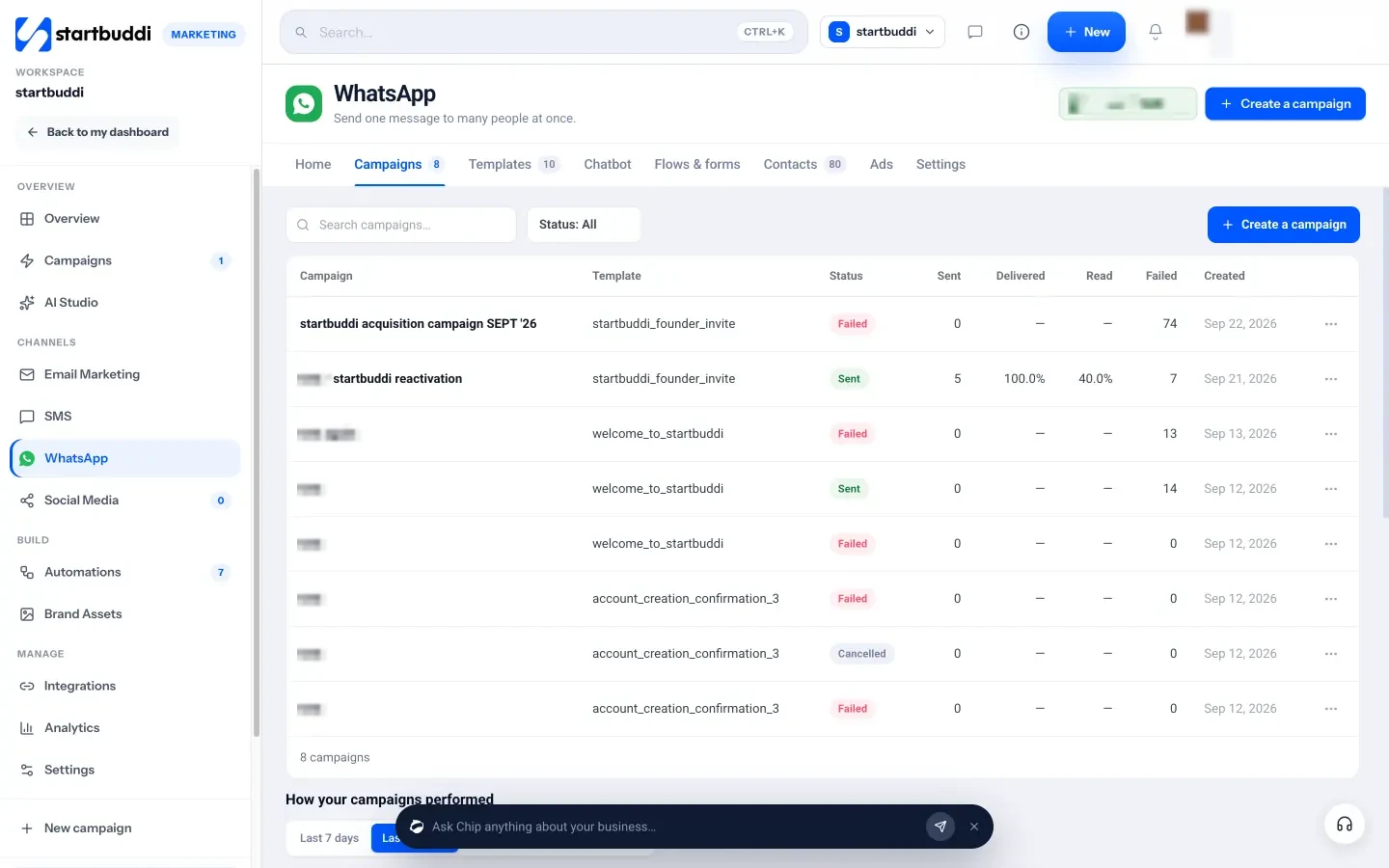
Your lists and segments are shared across email and SMS, so “past customers” or “leads who never bought” only need building once. See audiences, lists and segments for how that works.
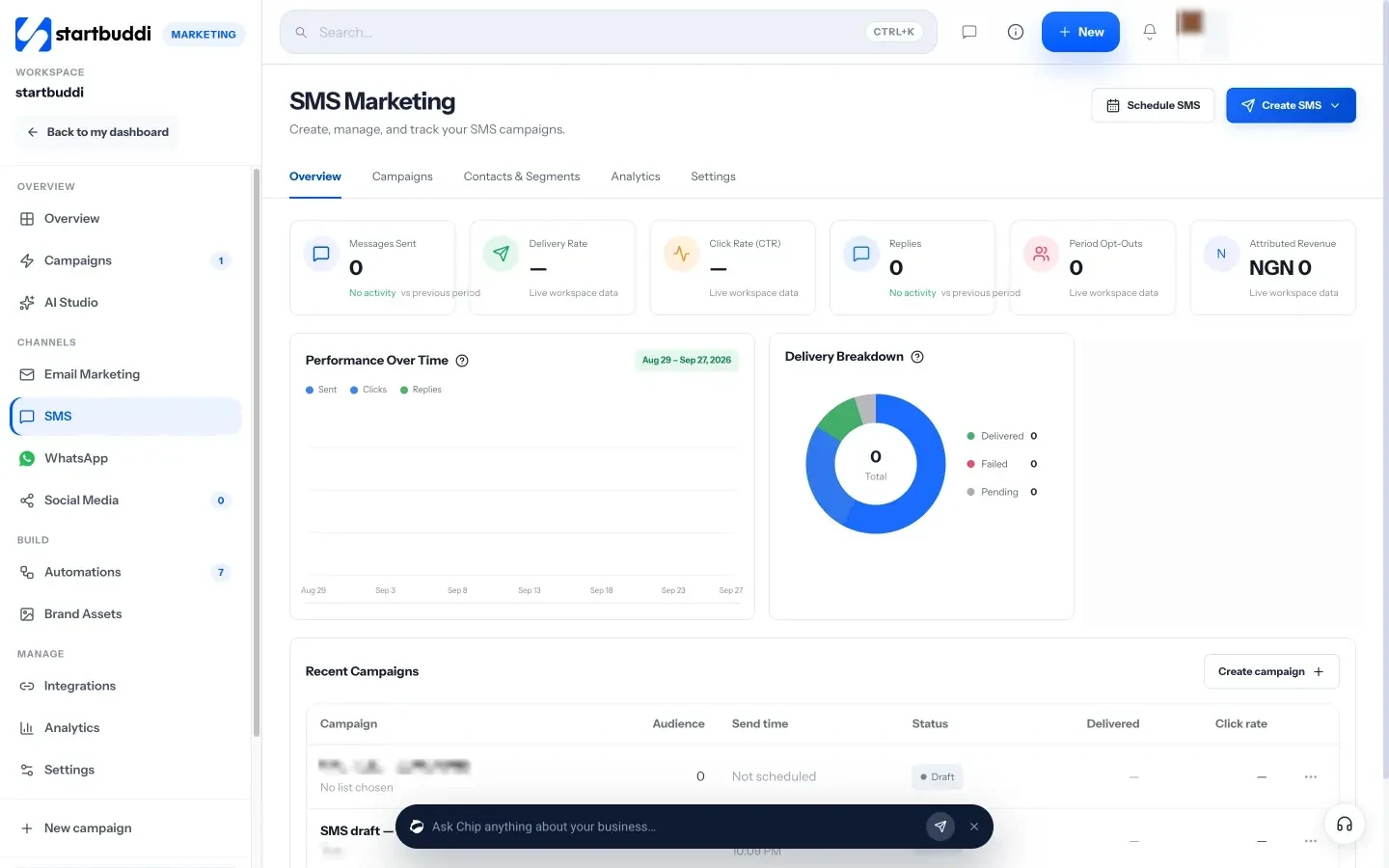
The Marketing module, including email campaigns, WhatsApp and SMS, is part of every paid plan from Starter up, and each paid plan comes with a 30-day trial.
Your next step
Pick a date for your next sale and fill in the five decisions from the top of this guide today: offer, dates, audience, channels and goal. When you’re ready to plan it all in one place, compare the plans on our pricing page and start a 30-day trial of Starter.
Sources
- WhatsApp Business Messaging Policy
- Meta: WhatsApp Business Platform pricing
- NCC Consumer Portal: Do-Not-Disturb (DND) service in Nigeria
- Nigeria Data Protection Commission (NDPC)
- Google: Email sender guidelines
- FTC: CAN-SPAM Act compliance guide for business
- Twilio: SMS character limits
- UK CMA: Unfair commercial practices guidance (CMA207)
Frequently asked questions
How long should a sale campaign run?
Five to ten days suits most small businesses. It gives people who miss the first message time to see a reminder, while the deadline still feels close.
How many messages should I send during a sale?
Three or four per person across the whole sale is plenty: a launch, a reminder and a last-chance message, plus replies to anyone who asks a question.
Can I send a WhatsApp sale message to all my phone contacts?
No. WhatsApp's policy only allows business messages to people who gave you their number and opted in to hear from you. Ask for permission first, for example at checkout or on a signup form.
Should I use email, WhatsApp or SMS for a sale?
Use all three if your customers have agreed to each, but give them different jobs: email to explain, WhatsApp to start conversations, SMS for short reminders.
Olabimpe Salami is the email and outreach specialist at startbuddi. Olabimpe writes about the messages that bring customers in and back: email, WhatsApp and SMS campaigns, follow-ups, and turning enquiries into paying clients.
Runs email and outreach at startbuddi