What is a purchase order?
Also called: PO, PO number, order form, purchase requisition (the internal request that comes before a PO)
A purchase order (PO) is a document a buyer sends to a supplier to order goods or services. It lists what is being bought, the quantity, the agreed price and delivery terms, and once the supplier accepts it, it confirms the deal.
A purchase order (PO) is the document a buyer sends to a supplier to say “we want to buy this, at this price, on these terms”. It lists the items or services, quantities, agreed prices, delivery date and a unique PO number. So what is a purchase order for? It puts the order in writing before any money or goods change hands, so both sides agree on exactly what was bought.
POs come from the buyer. The supplier’s invoice, sent later, is the request for payment.
What is a purchase order used for?
- Agreeing the price up front. No arguments later about what was quoted.
- Controlling spending. In a team, only approved POs can commit company money.
- Checking bills. When the invoice arrives, you compare it with the PO before paying.
- Tracking what is on order. Open POs show money you are about to spend.
For a small business, POs matter in two directions. You may use them when you buy from suppliers. More often, larger clients send you a PO, and they will not pay your invoice unless it quotes the PO number.
What goes on a purchase order
| Part | Example |
|---|---|
| PO number | PO-2026-0142 |
| Date | 3 March 2026 |
| Buyer and supplier details | Names, addresses, contact people |
| Items or services | “Brand photography, half day, 40 edited images” |
| Quantity and unit price | 1 × $1,200 |
| Total, tax and currency | $1,200 plus any tax, in USD |
| Delivery date and place | Shoot on 15 March, images by 22 March |
| Payment terms | Net 30 from invoice |
| Approval | Who signed it off |
How a purchase order works: an example
A hotel in Nairobi wants new photos for its website. The flow looks like this:
- The marketing manager asks internally for the budget (a purchase requisition).
- After approval, the hotel sends the photographer PO-0142 for KES 150,000, with the shoot date and 30-day payment terms.
- The photographer accepts the PO, does the shoot and delivers the images.
- She sends an invoice for KES 150,000 that quotes “PO-0142”.
- The hotel’s finance team matches the invoice to the PO and to proof of delivery, then pays within 30 days.
Step 5 is called three-way matching: PO, delivery record and invoice must agree before payment. It is how companies stop paying for things they never ordered or never received.
Purchase order vs invoice vs quote
| Document | Who sends it | When | Purpose |
|---|---|---|---|
| Quote or estimate | Seller | Before the order | Offers a price |
| Purchase order | Buyer | When ordering | Confirms what is bought and at what price |
| Invoice | Seller | After delivery (or as agreed) | Asks for payment |
A quote or estimate often comes first; the buyer’s PO accepts it; the invoice closes the loop. A proforma invoice is different again: a seller’s preview of an invoice, often sent so the buyer can raise a PO or arrange payment.
Does a small business need purchase orders?
If you are a one-person business buying a few things a month, a written quote and an email confirmation are usually enough. POs start to pay off when:
- More than one person can spend company money.
- You buy stock or materials regularly from several suppliers.
- Orders are large enough that a mistake would hurt.
- You need to track what is on order for budgeting.
Common mistakes
- Starting work before the PO arrives. If a client uses POs, the PO is your protection. Without it you may wait months to be paid.
- Leaving the PO number off your invoice. This is one of the most common reasons large clients delay payment.
- Changing the scope without a new PO. Extra work needs an updated or additional PO, or it may not be paid.
- Not closing old POs. Open POs that will never be used make your committed spending look higher than it is.
Purchase orders in startbuddi
There is no purchase order module in startbuddi, so the app will not create, send or approve POs for you. What it does cover is the paperwork on either side. When a client sends you a PO, you can quote the PO number in the notes of your invoice so their finance team can match it. Before the order, estimates let you price the job and convert an accepted estimate into an invoice with the same line items.
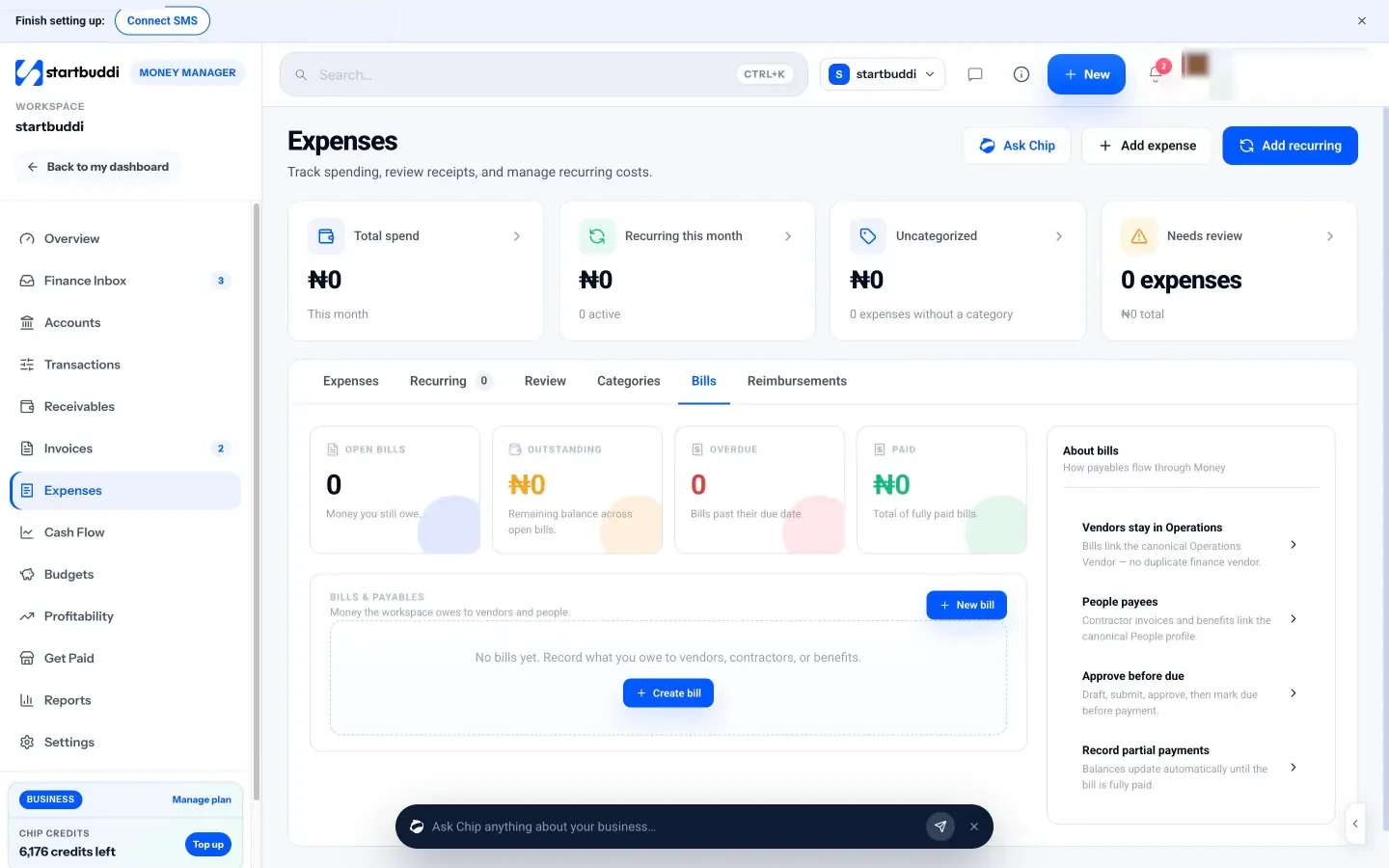
On the buying side, the Bills tab in Expenses records what you owe suppliers, with a Needs approval step before a bill is marked due, and partial payments as you pay. If you need full PO workflows with receiving and three-way matching, pair startbuddi with purchasing or accounting software. Your next step: check your largest clients’ invoicing rules and ask each one whether they need a PO number on your invoices.
Related terms
FAQ
Is a purchase order legally binding?
Once the supplier accepts a PO, it usually forms part of the contract between buyer and seller. Rules differ by country, so check with a local adviser for large or unusual orders. This is general information, not legal advice.
Who creates a purchase order, the buyer or the seller?
The buyer. The seller responds with an acceptance, delivers, then sends an invoice that quotes the PO number.
What is the difference between a purchase order and an invoice?
A purchase order is the buyer's order, sent before delivery. An invoice is the seller's request for payment, usually sent after delivery.
What is a PO number?
A unique reference the buyer gives each purchase order. Suppliers quote it on their invoice so the buyer can match the bill to the order.
Tiwalade Joanna Okedara-Kalu is the founder, CEO and CTO of startbuddi, the business system that brings clients, bookings, invoices, projects, marketing and the Chip AI assistant into one place. Tiwalade builds software around how service businesses really work day to day, and writes about client management, getting paid on time and why small businesses outgrow the tools they start with.
Founded startbuddi and leads its product and engineering