What is a credit note?
Also called: Credit memo, credit memorandum, credit invoice, negative invoice
A credit note is a document a seller issues to reduce or cancel an invoice already sent, for example after a return, an overcharge or an agreed discount. It records that the customer owes less, or is owed money back.
A credit note is a document you send a customer to reduce or cancel an invoice you have already issued. If you billed too much, the customer returned something, or you agreed a discount after the fact, the credit note records that the customer owes less than the original invoice said. So what is a credit note in one line? It is a “minus invoice” that corrects the record.
In the US it is usually called a credit memo. The idea is the same.
What is a credit note used for?
Once an invoice is sent, most accounting rules say you should not edit or delete it. Instead you issue a credit note that points back to it. Common reasons:
- A mistake on the invoice: wrong price, wrong quantity, charged twice.
- Returned goods or cancelled services.
- Faulty goods or poor service where you agree a partial reduction.
- A discount agreed after invoicing, such as a volume discount earned later.
- Cancelling an invoice entirely because the order fell through.
Why credit notes matter for a small business
It is tempting to fix a wrong invoice by quietly sending a new one. The trouble shows up later. Your total sales look higher than they were, your tax figures do not match, and the customer’s records disagree with yours. A credit note keeps both sets of books telling the same story: the original bill, the correction, and the reason. It also shows customers you handle mistakes properly, which builds trust with larger clients whose finance teams check every document.
How a credit note works: an example
Lucy runs a printing business in Leeds. She invoices a charity £1,200 plus VAT for 2,000 leaflets (invoice INV-0318). 400 arrive smudged, and she agrees to credit them rather than reprint.
| Document | Net | VAT at 20% | Total |
|---|---|---|---|
| Invoice INV-0318 | £1,200 | £240 | £1,440 |
| Credit note CN-0021 (400 leaflets) | −£240 | −£48 | −£288 |
| Amount now due | £960 | £192 | £1,152 |
If the charity has not paid yet, it now pays £1,152. If it had already paid £1,440, Lucy either refunds £288 or keeps it as credit against the next order, whichever they agree.
What a credit note should show
- The words “Credit note” clearly at the top.
- A unique credit note number (a separate sequence, such as CN-0021).
- The date.
- Your details and the customer’s.
- The number and date of the original invoice it relates to.
- What is being credited, the reason, quantity and amount.
- The tax being reduced, if you charged tax, and the total credit.
- Whether the credit will be refunded or used against future invoices.
Credit note vs refund vs debit note
| Term | What it is |
|---|---|
| Credit note | A document that reduces what the customer owes. It may or may not lead to money being paid back. |
| Refund | Money actually returned to the customer. |
| Debit note | The opposite: raises what is owed, for example after undercharging. Buyers also send debit notes to request a credit from a supplier. |
| Chargeback | A forced reversal of a card payment by the customer’s bank, not something you issue. |
A credit note is not a receipt either: a receipt confirms a payment was made, while a credit note corrects a bill.
Common mistakes
- Editing or deleting the original invoice. It breaks your numbering and your audit trail. Leave the invoice and add a credit note.
- Not linking it to the invoice. Always quote the original invoice number.
- Forgetting the tax. If you charged VAT or GST, the credit note must reduce it too, or your tax return will be wrong.
- Leaving credits forgotten. Unused customer credits are money you owe. Keep a list and apply them to the next bill or refund them.
Related terms
A proforma invoice comes before a sale; a credit note comes after one, to correct it. Credit notes lower accounts receivable when they reduce an unpaid invoice.
Credit notes in startbuddi
Money Manager does not create credit notes as a separate document today. What you can do: if an invoice has not been paid, the invoice statuses include Cancelled, so you can cancel it and send a corrected one. If the customer has paid part of a reduced amount, Record payment accepts partial payments and the invoice shows Partially paid. The Transactions feed has a Refunds filter so refunds made through your connected payment provider stay visible alongside other money movements.
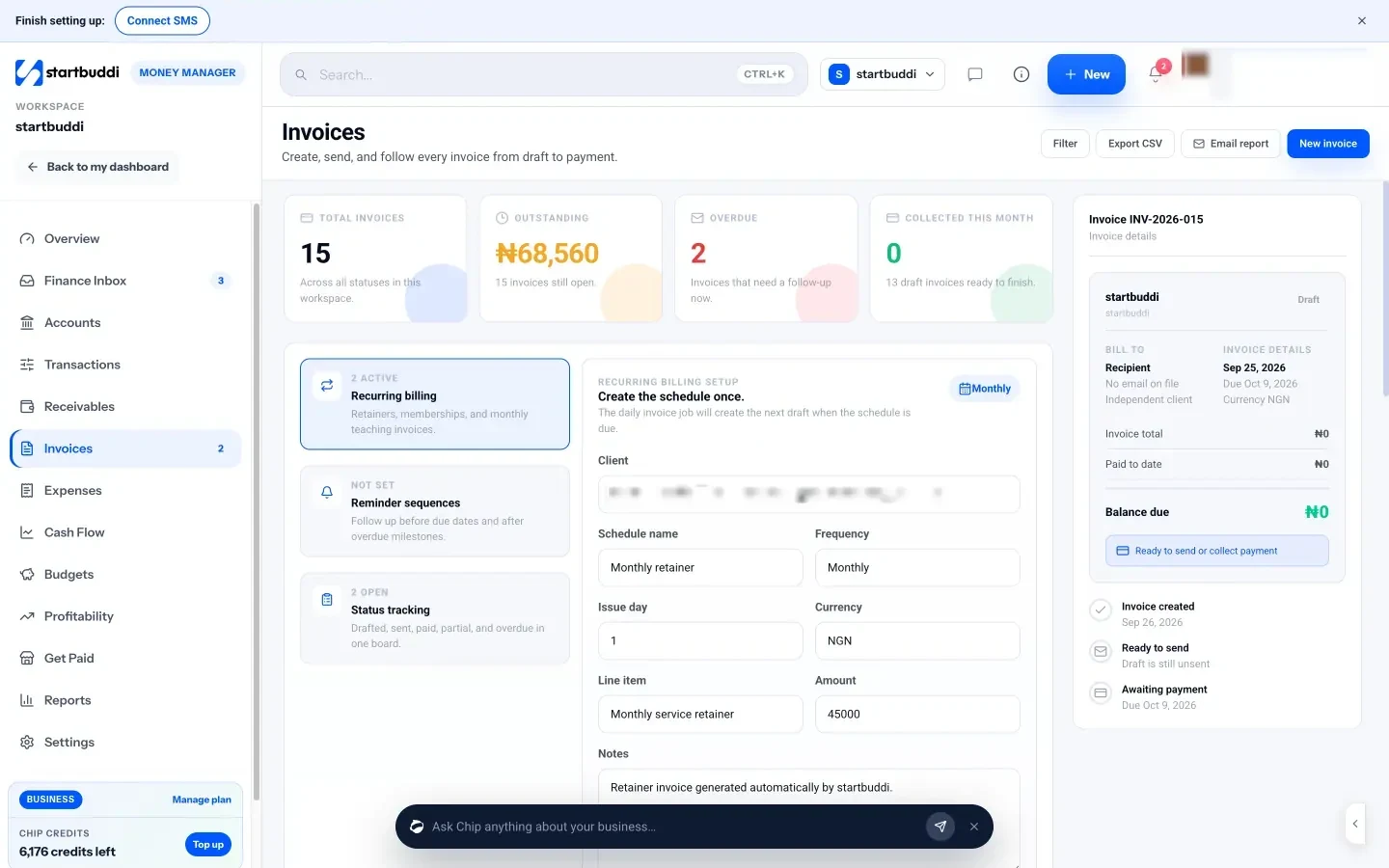
If your tax rules require a formal credit note, write one from a template in Documents and keep your accountant’s software as the official record. Your next step: decide on a credit note number format now (for example CN-001) so the first correction is simple.
Related terms
FAQ
Is a credit note the same as a refund?
No. A credit note reduces what a customer owes. A refund is money actually paid back. A credit note can lead to a refund, or the credit can be used against a future invoice.
Can I just edit the original invoice instead?
Once an invoice is sent, most accounting and tax rules expect you to leave it unchanged and issue a credit note. Editing breaks your records and can cause tax problems.
What is the difference between a credit note and a debit note?
A credit note lowers the amount owed on an invoice. A debit note raises it, for example after undercharging, or is sent by a buyer to request a credit.
What is a credit memo?
Credit memo is the common US name for a credit note. It does the same job.
Tiwalade Joanna Okedara-Kalu is the founder, CEO and CTO of startbuddi, the business system that brings clients, bookings, invoices, projects, marketing and the Chip AI assistant into one place. Tiwalade builds software around how service businesses really work day to day, and writes about client management, getting paid on time and why small businesses outgrow the tools they start with.
Founded startbuddi and leads its product and engineering