You spent weeks building your website. You picked the colours, wrote the copy. You added a services page, an about page, and a contact form.
But visitors still leave without booking. Without buying. Without doing anything.
Here is what most people do not find out until much later: it is not about how your website looks. It is about how your website thinks. Specifically, it needs to think the way your customers think when they are deciding whether to trust you.
That process has a name. It is called the customer decision journey, and it is the most important framework for building a website that actually converts.
This guide will walk you through what the customer decision journey is, how real buyers move through it, how to structure your pages around it, and what quietly kills conversions even when founders get it mostly right. By the end, you will know exactly how to make your website work harder at every stage.

Before we talk about structure, you need to be clear on what the customer decision journey actually is, because it is not a straight line.
Research from McKinsey’s consumer decision journey study shows that buyers loop back, compare options, revisit content, and only commit when they feel certain enough. Someone might find you on Google, leave, come back three days later, read your FAQ, and then finally book.
Your website needs to work at every point of that loop. When it is built around your services instead of your buyer’s questions, most of those touchpoints fail. Visitors do not feel understood. They leave.
So the starting point is not your homepage. It is your customer. And once you understand that, the way you build every page changes completely.
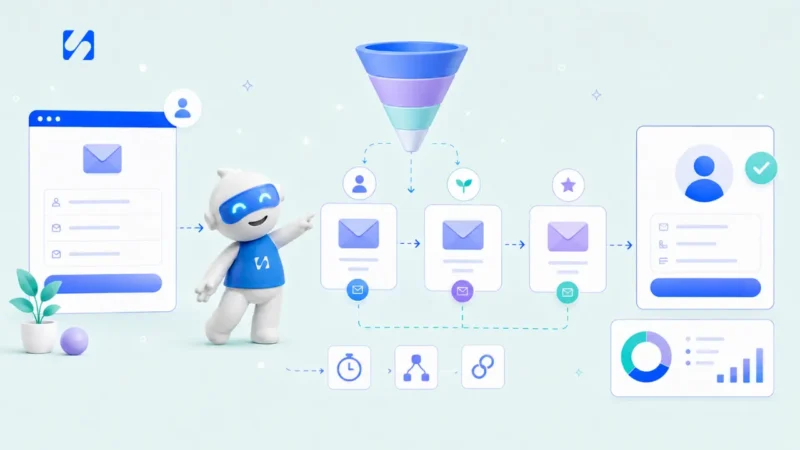
The customer decision process moves through three core stages. Your website needs a clear answer ready at each one, because visitors arrive at different moments in their thinking.
The Awareness Stage is where someone realises they have a problem. They are searching with questions, not looking for a specific product yet. Your blog content, your SEO copy, and your homepage headline all live here. If your content does not speak to the problem they already feel, they scroll away.
The Consideration Stage is where they are actively comparing options. They want to know whether your solution fits their situation specifically. This is where trust signals, process breakdowns, and outcome-based content do the work. Psychologist Daniel Kahneman’s research on decision-making in Thinking, Fast and Slow shows that buyers look for reasons to feel safe, not just reasons to say yes. Testimonials and clear processes reduce that mental friction.
The Decision Stage is the moment they are ready to act. This is where friction kills conversions. If your booking is complicated, your pricing is buried, or your CTA is unclear, you lose people who were already convinced. This stage needs to feel fast, simple, and reassuring.
Most websites only think about the decision stage. A conversion-focused website structure gives equal attention to all three, and that is what separates sites that grow from sites that stagnate.

Now the customer decision journey becomes practical. Here is how each page type maps to a stage, and what changes you need to make.
Your homepage should lead with the problem your customer already recognises. Not your brand name. Not a feature list. Use intent-based language like “struggling to get consistent clients?” rather than “welcome to our services.” Within three seconds, a visitor should know what you solve and who it is for.
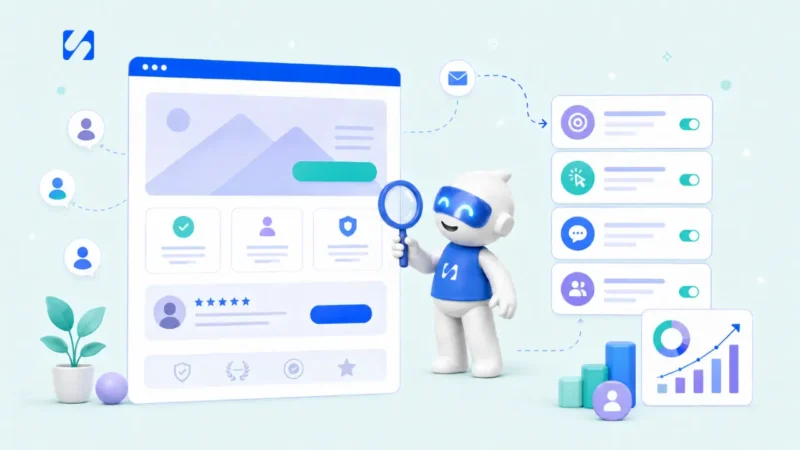
Your services or solutions pages carry the weight of the consideration stage. Break down your process. Answer the objections they are already thinking. Use real outcomes instead of vague benefits. Your trust signals need to be visible here, not locked away on a separate testimonials page.
Your booking or sales page should remove every barrier at the decision stage. Keep it short. One clear action. Remove anything that might cause doubt at the last moment. Even small things like a confusing checkout experience can make someone who was ready walk away without completing.
The problem most founders run into is not understanding individual pages but connecting them into one coherent flow. The homepage does not lead naturally to the services page. The services page does not guide people toward a booking. Everything sits in silos and the journey breaks.
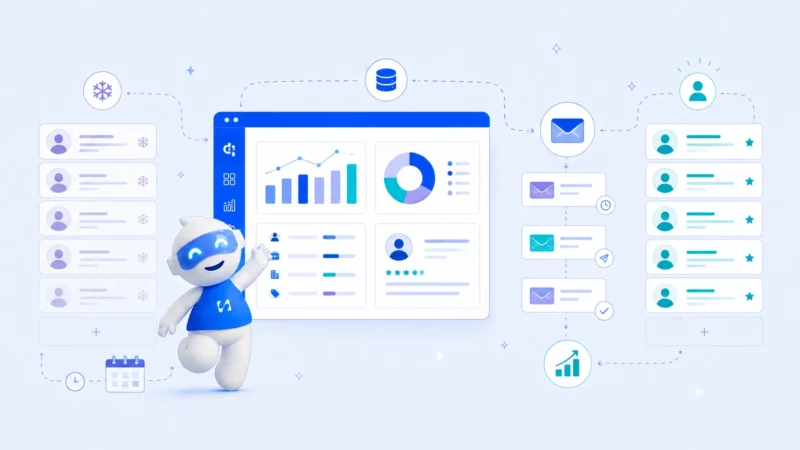
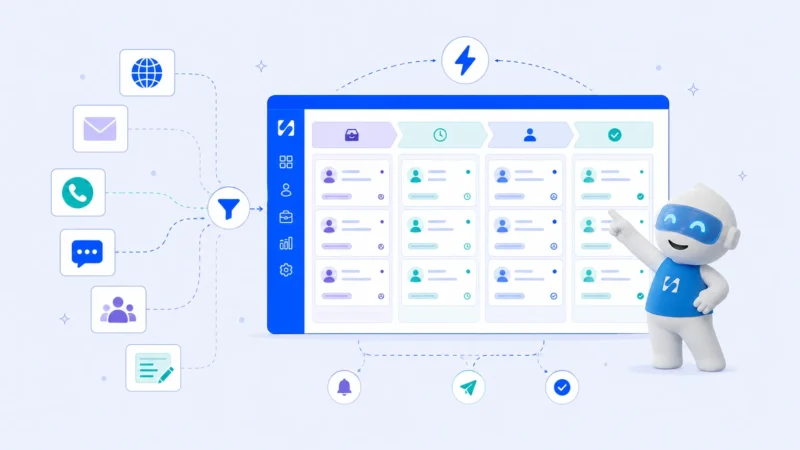
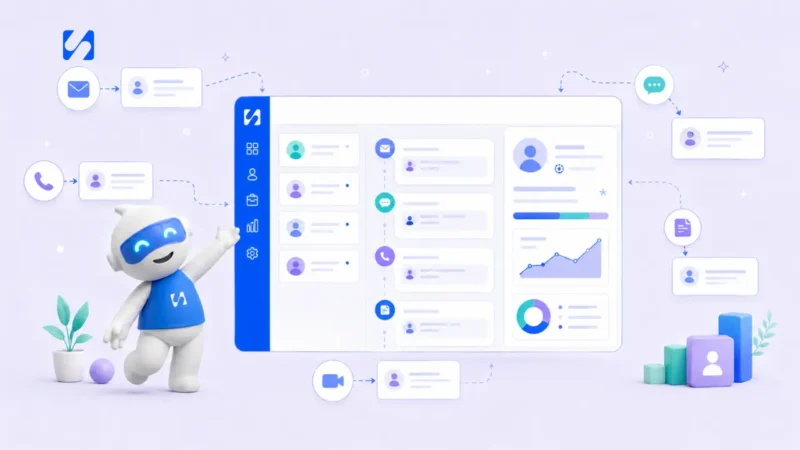
This is exactly where startbuddi changes things. Rather than leaving founders to figure out how pages should connect, what automations should follow a booking, or how a CRM ties into a website, Startbuddi builds the entire connected system for you. Website, bookings, CRM, payments, funnels, and automations, all structured around how your customers actually make decisions. You launch in days, not months.
Even when founders understand the customer decision process stages, there are common gaps that silently kill conversions. This section is about catching them before they cost you.
Unclear next steps. Every page should have one clear action it leads toward. If a visitor has to figure out where to go next, most will not.
Trust signals in the wrong place. Many founders keep testimonials on a reviews page. But someone in the consideration stage needs to see social proof on the same page where they are reading about your service.
Slow or broken booking flow. Research from HubSpot on conversion optimisation shows that reducing form fields and simplifying the path to purchase can meaningfully improve results. People abandon when the process feels like too much work.
Copy that talks about you instead of them. Whether you are running an ecommerce brand or a service business, your language needs to follow the buyer’s thinking. Audit your pages and count how many times you say “we” versus “you.” If most of your copy is about your company, it is not aligned with where your buyer is.
For founders investing in SEO alongside their website structure, this alignment matters even more. Content that matches the right stage pulls in the right leads and keeps them moving forward.
Each of these friction points maps directly back to a stage in the customer decision journey. Fix the friction, and the journey flows.
It is the process a buyer goes through from first becoming aware of a problem to making a final purchase. It includes the awareness, consideration, and decision stages, and it often involves multiple visits before someone commits.
A funnel assumes a straight path. The customer decision journey reflects that buyers loop back, compare, and revisit content before deciding. A well-built website accounts for that non-linear behaviour.
Awareness needs problem-focused messaging. Consideration needs trust signals and clear outcomes. Decision needs a frictionless, fast path to booking or purchase.
Walk through your site as a stranger would. Ask: does my homepage clearly name the problem I solve? Does my services page give someone enough confidence? Can someone book in under two minutes? If you hesitate on any of those, there is a gap to fix.
The customer decision journey gives you a real framework to audit and restructure every page so that visitors have a clear path from first click to final booking.
The hard part is execution. Rebuilding your site to properly map a customer journey means touching your homepage, service pages, booking flow, CRM, and automations all at once. For most founders, that is months of work with tools that never quite connect.
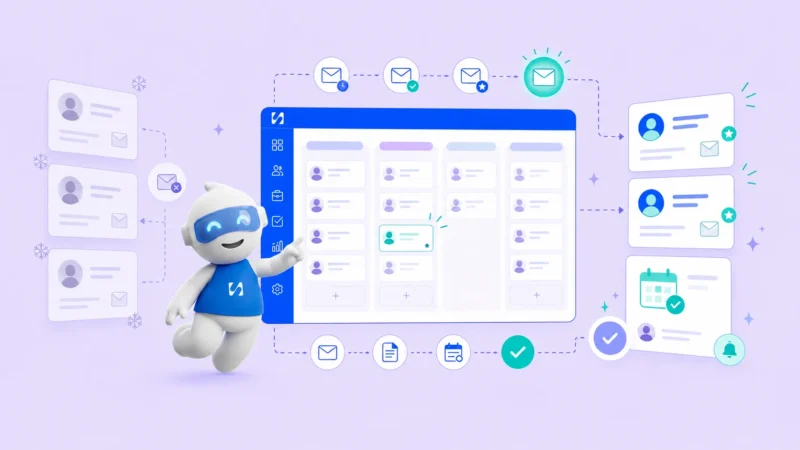
That is why startbuddi is the way. It gives you a complete system — website, bookings, CRM, payments, and automations all connected from day one. You can create a free account, choose only the modules you need, and launch in days. Paid plans start at less than $10, making it one of the easiest decisions you will make for your business.
You finally got traffic to your website. You can see people visiting. The numbers are climbing. But nobody’s booking. Nobody’s signing up. Nobody’s even filling out your contact form.
I know that feeling. You spent weeks getting the site live, posted on LinkedIn a few times, and now you’re watching visitors arrive and leave without a trace.
The truth is, having an online presence and having one that turns visitors into leads are two completely different things. Most founders focus on getting visible, getting found on Google. But visibility without conversion is just noise.
This guide will walk you through how to build an online presence that doesn’t just attract visitors, but turns them into people who trust you enough to give you their email or book a call. You’ll understand what needs to exist on your site to make that happen.
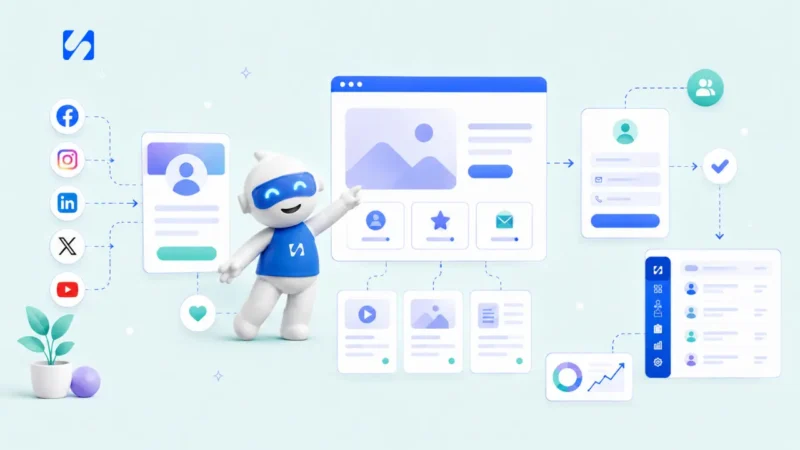
When people say “build an online presence,” they usually mean: get a website up, post on social media, maybe start a blog. But if you want leads, not just lurkers, your online presence needs to guide people somewhere.
Your website homepage is not a brochure. These are all parts of a conversion path, the journey someone takes from “I just heard about you” to “I want to work with you.”
Most founders have pieces of this path, but the pieces don’t connect. Their website looks nice but doesn’t tell visitors what to do next. Their email list exists, but there’s no lead magnet worth signing up for.
The goal is simple: every part of your website presence should move someone closer to saying yes. Your website, social profiles, and call-to-action need to work together like one system. Understanding what converts is the first step. The next is figuring out why most online presences fail.

You’d think that if people are visiting your site, some would convert. But here’s what usually happens.
Someone lands on your homepage through Google search. They look around for eight seconds. They don’t see what they need, they would leave.
This isn’t because your offer is bad. It’s because your online presence speaks to cold audiences like they’re warm audiences.
When someone is problem aware, they need education first. But most homepages skip straight to “Book a call,” which feels pushy when trust hasn’t been built.
Another issue is message consistency. If your Instagram says one thing and your website says another, visitors get confused. Confusion kills conversion.
Then there’s the conversion ecosystem problem. Most founders have a website, an email list, maybe a booking link. But these tools don’t align with each other. Payments aren’t connected to the CRM. The lead magnet doesn’t add people to a sequence automatically. If you want everything to sync from day one, startbuddi connects your website, CRM, email automations, and booking system into one working ecosystem — no manual stitching required.
If you want an online presence strategy that works, there are a few non-negotiables.
First, you need a clear homepage that explains what you do within three seconds. A clear statement like “I help coaches get their first ten clients” or “Done-for-you bookkeeping for service businesses.” If you’re unsure what that should look like in practice, this guide on building a high-converting website breaks down exactly what needs to be on each page to turn visitors into leads.
Your homepage should include social proof. Testimonials, logos, or case study snippets. According to BrightLocal research, 97% of consumers read online reviews before deciding to work with a business.
Next, you need one clear call-to-action on every page. “Download the free guide” or “Book a 15-minute call.”
You also need a lead magnet. A checklist, template, or short video that solves one specific problem.
Your email list is where the relationship begins. Most people won’t buy the first time they visit. But if they’re on your list, you can build trust accumulation over time. This is demand generation, not just demand capture.
Finally, everything needs to connect. Your website should feed into your email list. Your booking page should sync with your CRM.
When these elements work together, you’re set up to turn traffic into leads. But knowing what you need is half the battle. The other half is making sure people find you.
Here’s what nobody tells you: posting more doesn’t always mean growing more.
If you want online visibility vs conversion that works, show up where your audience is searching. That means SEO. In 2026, Google’s RankBrain prioritizes content depth and semantic relevance.
If you’re writing about an online marketing funnel, Google wants related concepts like lead generation strategy, multi-touch journey, and conversion path.
LinkedIn works differently. The algorithm rewards engagement, so posts need to start conversations.
But you can’t do all of this manually and still run your business. If you’re spending hours daily managing your website and connecting tools that don’t sync, you’re exhausted.
This is where most founders hit a wall. They know what they need. They just don’t have the time to build it.
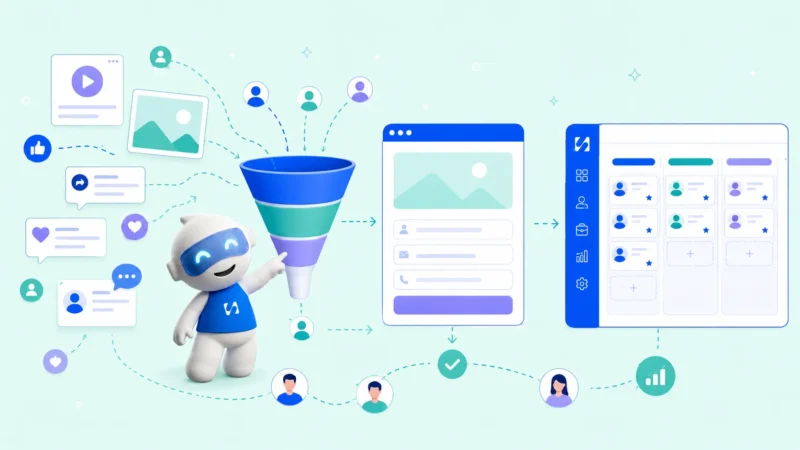
startbuddi exists for exactly this moment. It’s a done-for-you business systems platform that builds your entire digital presence for business as one connected ecosystem: website, booking system, CRM, email automations, and funnels to generate leads from website traffic. Everything syncs. Everything works.

Getting found is only the beginning. The real work is turning that visibility into how to get leads online.
This is where your strategy shifts from “getting traffic” to “guiding decisions.” Every visitor is at a different stage of problem awareness.
For cold audiences who don’t know you yet, your content needs to educate. Blog posts and free resources build online authority building without asking for anything.
For warm audiences who’ve already engaged, you can introduce your lead magnet or invite them to book a call. Your email list is where this nurturing happens.
For hot audiences ready to work with you, your conversion path should be frictionless. One-click booking. Simple checkout.
The mistake most founders make is treating everyone the same. People don’t move in straight lines. Some need weeks. Others are ready immediately. Your system needs to handle both.
When your online presence is set up to guide people through this journey, lead generation stops feeling like a guessing game.
Start with a clear website that explains what you do. Add a lead magnet to capture emails. Post consistently on one social platform where your audience is active. Make sure every piece connects to your email list or booking page.
Traffic is people visiting your site. Leads are people who give you their contact information because they’re interested. You can have thousands of visitors and zero leads if your site doesn’t guide people to take action.
Quality matters more than frequency. Posting twice a week with valuable content will grow your presence faster than posting every day with generic updates.
If you’re doing it manually, expect three to six months of consistent effort. If you use a done-for-you system like startbuddi, you can be live and converting within days.
If you’re tired of watching visitors come and go without converting, it’s time to stop patching together tools and start using a system that actually works.
startbuddi makes it easy to get started — create a free account, pick only the modules your business needs, and have your conversion system live faster than you’d expect. Paid plans start at less than $10, making it one of the most practical investments you can make in your growth right now.
I remember staring at my homepage for three hours straight. Not because I was proud of it. Because I had no idea if it was actually working.
The design looked clean. I had a hero section. I even added some trust badges. But when I checked the bounce rate the next morning, it was brutal. People were landing, scrolling halfway down, and leaving. No bookings. No sign-ups. Just silence.
If you have ever built a website and wondered why people are not converting, you are not alone. Most people assume the problem is the design. But here is what I learned: your homepage is not failing because it looks wrong. It is failing because it is not answering the questions your visitors are silently asking.
This guide will walk you through what makes a high converting website homepage actually work and the exact homepage structure that websites that convert use to turn visitors into clients.

Before we dive into specific elements, you need to understand the fundamental shift that changes everything.
Your homepage is not a brochure. It is a conversation between you and someone who just showed up with a problem. They are asking themselves a series of questions, and if you do not answer them fast, they leave.
Every high converting website follows the same pattern. It answers specific questions visitors have in their mind, in order. If you skip one, people get confused. Confusion kills conversions.
Your homepage needs to answer these questions clearly. When you do that, your homepage conversion rate goes up without needing expensive tools.
The first question hits them within three seconds of landing, so let’s start there.
The moment someone lands on your site, they are scanning for one thing: proof they are in the right place.
Your hero section needs to tell visitors immediately what you do and who you do it for. Not in a clever tagline. In one clear sentence.
A high converting homepage uses value proposition clarity. If someone reads your headline and cannot tell what you do in five seconds, it fails.
For example, instead of “We Help Businesses Grow,” try “Done-For-You Website Setup for Coaches Who Need to Start Booking Clients This Week.”
Your hero section should also include a visual that shows the outcome they want. According to research from Nielsen Norman Group, users spend most of their viewing time above the fold, so this section has to work hard.
Once they know what you do, they immediately ask themselves if it applies to them specifically.
Knowing what you do is not enough. Visitors need to feel like you understand their exact situation right now.
This is where converting websites speak directly to the visitor’s real struggle. Think about how people search when stuck. They type “how to set up a website without learning code” or “how to connect bookings to payments.”
Your homepage needs to reflect that pain back. List three to five specific situations:
This is friction reduction in UX design. When they see their exact situation described, they relax and think, “This person gets it.” If you are building this system from scratch, a platform like startbuddi can eliminate that duct-taping problem entirely — it connects your website, bookings, CRM, and payments so the chaos your visitors are describing never becomes yours either.
Once they feel understood, they start paying attention to your solution. But before they commit to anything, they need to answer one critical question about you.

Understanding their problem is good. But if they do not trust you, none of it matters.
You can have the clearest value proposition, but if someone does not trust you, they will not book or buy.
The best websites that convert use testimonials that are specific and relatable. Not “Great service!” but “I went from juggling five tools to having everything in one place in two days. I booked three clients the first week.”
You can also use trust badges if they are real. Payment security icons, real certifications, or actual media mentions. Show your pricing section if you can. Show screenshots of your actual product. The more real you are, the more trust you build. Startbuddi makes this easy by giving you a live, connected system you can actually screenshot and show — real bookings, real payments, real automations working together from day one.
Once trust is established, visitors move to evaluating whether what you offer is actually worth their time and money.
Trust gets them to stay. But value is what makes them take action.
Most homepages list features: “CRM, website builder, payment processing.” That does not answer the real question: “What does this get me?”
A high converting website homepage flips this. Instead of “We provide website setup,” try “You will have a live website, connected bookings, and automated client follow-ups in 7 days without learning a single tool.”
This is offer positioning. Use a simple “How It Works” section with three clear steps. Make it feel easy.
A good homepage conversion rate depends on your industry, but generally 2% to 5% is average for most service-based businesses. If you are seeing less than 1%, your homepage likely is not answering visitor questions clearly enough.
Include a clear value proposition in your hero section, proof that you understand your visitor’s problem, trust signals like real testimonials, an explanation of outcomes not just features, and one clear call-to-action.
Check Google Analytics for bounce rate and time on page. If people leave within 10 seconds, your hero section is not clear. Use heatmaps from tools like Hotjar or Microsoft Clarity to see where people scroll and click.
Not at first. Before A/B testing, make sure your homepage answers basic questions: what you do, who it is for, why they should trust you, what they get, and what to do next. Most homepages fail because they skip these conversion-focused design basics.
Building a high converting website is not about fancy design. It is about understanding that every visitor is having a silent conversation with your page, deciding whether to stay or leave.
When you structure your homepage to answer questions clearly and in order, conversion stops feeling like a mystery. People book. They sign up. They buy because you made it easy for them to see you understand their problem and have a real solution.
If you are ready to stop making the same mistakes that silently kill conversions, startbuddi gives you a complete system — website, bookings, CRM, payments, and automations all connected from day one. You can create a free account, choose only the modules you need, and launch in days. Paid plans start at less than $10, making it one of the easiest decisions you will make for your business.
I remember staring at my Google Analytics at 11 PM, watching traffic come in but no bookings. People showed up and left.
If you run a business online, you know this feeling. Visitors leave without taking action.
It is not about your offer. It is about small website mistakes that create friction and make people click away to competitors.
This guide covers the most common website mistakes to avoid. You will learn what stops people from booking or buying and what needs to change so your website not converting problems disappear.

When someone lands on your site, they do not know what action to take. Should they read your About page? Download something? Book a call?
This creates decision fatigue. Research from psychologists Sheena Iyengar and Mark Lepper found shoppers were 10 times more likely to purchase when presented with 6 jam varieties instead of 24. Too many options decrease action.
Your call to action clarity matters more than design. If someone cannot figure out what to do within 5 seconds, they leave. Is there one clear action above the fold? Or are multiple buttons creating a poor attention ratio?
Choose one primary action per page. Make that button stand out. Use clear language like “Book Your Free Consultation” instead of “Learn More.”
Page speed performance is one of the major reasons people don’t buy online.
According to Google’s research on mobile speed, 53% of mobile users abandon sites that take longer than 3 seconds to load. If your website is slow, you lose half your clients before they see your offer.
A website that loads fine on your laptop might be painfully slow on a phone. Large images and heavy design create interaction costs. Every second someone waits is another second they reconsider.
Check your site speed using Google’s PageSpeed Insights. If your score is below 50 on mobile, compress images, remove unused plugins, and consider faster hosting. This is essential for website conversion optimization and to reduce bounce rate.
People buy from businesses they trust. Trust comes from trust signals you might be missing.
When I launched my first service, no one was booking. Someone said, “I did not know if you were real.” No photos, testimonials or social proof.
Trust signals include testimonials with real names and photos. Show credentials or years in business. Use professional photos, not stock images.
Case studies work well. Show specific perceived value: “I helped Sarah go from 2 clients a month to 12 clients in 90 days.”
Reviews, client logos, and media mentions build trust and address the user intent mismatch between what they expected and found.
Over 60% of web traffic comes from mobile devices. If your website does not work perfectly on a phone, you turn away most clients.
Mobile responsiveness is about whether someone can actually use it. Can they tap buttons? Read without zooming?
Beautiful desktop websites can be unusable on mobile. Buttons too small, forms that break, images that do not resize all create friction and contribute to funnel drop-off. If you are unsure whether your business even needs a funnel or just a better website ,this guide breaks it down clearly so you can fix the right thing first.
Test your website on your phone. Try to book or purchase. If anything feels clunky, fix it immediately.

Your website should do the thinking for visitors. When someone lands on your page, they should immediately understand what you do and why they should care.
Maybe your homepage tries to explain every service instead of focusing on the main problem. Maybe you use technical language that confuses your ideal client.
Think about user intent mismatch. If someone searches “how to book more clients” and lands on “synergistic business optimization,” they leave.
Read your homepage like it is new. Would you understand it? If not, simplify. Use the language your clients use. Study heatmap behavior to see where people get stuck.
This is where founders realize their website was built as separate pieces. A booking tool that does not talk to payments. A contact form that does not connect to the CRM. startbuddi solves exactly this — giving you a complete business system where your website, bookings, payments, CRM, and automations all work together from day one.
The biggest conversion mistake is asking too much too soon.
You want them to book a call, fill out a 12-question form, watch a 20-minute video, and commit before they know you. That is an obstacle course.
Think about micro-commitments. Every action requires mental energy. If someone just found your website, asking for a 90-minute strategy session is too much.
Start smaller. Download a guide. Read an email. Watch a video. Book a 15-minute call. Each yes builds momentum.
One case study showed reducing form fields from 11 to 4 increased conversions by 120%. Friction matters.
Look at funnel drop-off points. Where are people leaving? That is where you are asking too much.
Even when someone wants your offer and trusts you, they will hesitate. “I will think about it.” “Let me check my calendar.”
Anticipate these objections. This is where attention ratio matters. On your sales page, how many ways can someone leave versus say yes? Links to your blog, about page, and social media give them exits.
Remove distractions. On a conversion page, only “yes” or “close the tab.” Make your value proposition clear. Show the outcome. Handle objections through first impression psychology.
Let people book instantly. Show stock levels to reduce decision paralysis. Ask only for essential information in forms. Every field you remove increases conversions.
The biggest website mistakes include unclear calls to action, slow page speed, missing trust signals like testimonials, broken mobile experiences, confusing messaging that creates cognitive load, asking for too much information too soon, and creating too many distractions on conversion pages.
To reduce bounce rate, focus on page speed performance, mobile responsiveness, and matching user intent with your content. Make sure your value proposition is clear above the fold, simplify your messaging, and ensure your first call to action requires low commitment.
Your website is probably not converting because of friction points in your conversion path. This could be slow load times, lack of social proof, confusing navigation, forms that ask for too much information, or unclear next steps. Use analytics to see where people are dropping off.
Essential trust signals include client testimonials with real names and photos, case studies showing specific results, professional photos of yourself or your team, credentials or certifications, number of clients served, and reviews. These elements build perceived value and reduce hesitation
If you see your website in these website mistakes, you now know what is fixable.
Most business owners have conversion problems because their websites were never built to convert. They were built to exist and look professional.
Your website should be your best salesperson. It should guide people, build trust, remove friction, and make saying yes easy.
You built something real. A service, a skill, a business you are proud of. But somehow, the clients are not showing up the way you expected. You are posting, sending emails, following up manually, and it still feels like you are starting from zero every single week.
If you’ve felt this way before, then you are not alone. Most business owners I talk to are not missing talent. They are missing a system. Specifically, they are missing a sales funnel.
And if you just thought “I have no idea what that means,” that is exactly why this post exists.
This guide will walk you through what is a sales funnel, how it works in simple terms, why your business needs one, and how you can start using one without spending months setting it up. By the end of this post, you will know how to stop chasing clients and start attracting them in a way that works even when you are not online.

Most definitions make this sound complicated. They throw in terms like “pipeline stages” and suddenly you feel like you need a marketing degree just to get a client.
So let me keep this simple.
A sales funnel is the path a stranger takes to become your paying client. It is a series of steps that move someone from “I have never heard of you” to “I just paid you.” The word funnel makes sense because at the top you have a lot of people who might be interested, and at the bottom, you have the ones who are actually ready to buy.
Think about the last time you found a new business online. You saw something, clicked around, maybe signed up for something free, got a few emails, and eventually either bought or moved on. That was a sales funnel working on you. Good funnels feel natural, which is the goal for your business too. If you want a closer look at what that structure looks like in practice, this guide will help you see exactly how a simple funnel comes together from start to finish.
Understanding what is a sales funnel becomes much easier when you see it broken into stages. Each stage represents where your potential client is in their thinking, and what they need from you at that moment.
Awareness is the top of the funnel. Someone finds you for the first time through a Google search, a social post, or a referral. Your job is simply to show up and make a good first impression.
Interest is where they start paying attention. They read your content or visit your website. They are curious but not ready to buy. This is where most businesses lose people because there is nothing to capture their information and keep them moving forward.
Consideration is when they are actively thinking about whether you can solve their problem. They compare options and look at testimonials. This is where your social proof and clear service pages matter most.
Decision is the moment of action. They are ready. The only question is whether your booking process, payment setup, and follow-up are smooth enough to close the gap. A broken checkout here costs you real money.
According to HubSpot’s marketing funnel guide, building a funnel means mapping your customer journey from initial awareness through conversion, then aligning content and touchpoints to each stage — because without that structure, you are simply hoping people figure out what to do next on their own.
Each stage requires a different message and a different tool, which is exactly why so many founders end up stitching together five platforms and still feel like nothing is working. A connected system like startbuddi bridges all those stages in one place, so your email capture, follow-up, and bookings work together without the usual scramble.
Here is the honest truth. Most founders struggle not because they are doing something wrong, but because nobody ever showed them how a funnel actually connects end to end.
What most people have is not a funnel. It is a collection of disconnected pieces. A website over here. A booking link somewhere else. An email list they set up once and forgot about. A payment processor that does not talk to anything. When a lead comes in, they manually follow up. When a payment fails, nobody notices.
That is not a system. That is a job you gave yourself that nobody hired you for.
A real sales funnel is connected. Someone finds you, lands on a page that speaks to their problem, takes a small action, and moves toward a paid relationship without you babysitting every step. The customer journey should feel seamless for them and for you.
This is where Startbuddi changes things. Instead of connecting ten tools yourself, you get a complete system where your website, bookings, CRM, payments, and follow-up sequences are already working together from day one. No duct tape. No months of setup. Just a funnel that actually functions.

Now we get to the part most people actually care about. What is a sales funnel doing for your business when you are not actively working?
When your funnel is set up properly, it runs in the background around the clock. Someone finds your website at 11pm on a Tuesday, books a discovery call, and gets a confirmation email automatically. You wake up to a scheduled call in your calendar without sending a single message.
That is automated client acquisition. A good funnel includes a lead magnet, something free and useful that earns someone’s email address. It includes a nurture sequence, a series of emails that builds trust over time. And it includes a smooth path from interest to payment with no friction in between. If you want a practical example of what that whole flow looks like when it is running properly, startbuddi walks through exactly how each piece connects so nothing falls between the cracks.
According to Google’s 7-11-4 research on the Think with Google platform, buyers engage with an average of 11 touchpoints across 4 different locations before making a purchase decision. A funnel makes sure those interactions happen automatically instead of depending on you to show up every time.
The difference between founders who are always hustling and those who have predictable client flow is almost always this: one has a funnel, and one does not.
A sales funnel is the step-by-step path that takes someone from discovering your business to becoming a paying client. It guides people through awareness, interest, consideration, and decision automatically, so you are not chasing every lead manually.
Yes. Without a funnel, you are relying on word of mouth and manual follow-up. A funnel creates a repeatable system for attracting, nurturing, and converting clients without the constant hustle.
At minimum, you need a landing page, email capture, an automation sequence, a booking system, and a payment processor. The challenge is connecting them. Platforms like Startbuddi bundle all of this into one connected system so nothing falls through the gaps.
If you are connecting tools yourself, it can take weeks or months. With a done-for-you system, you can have a working funnel live in days.
You do not need to build something complicated. A simple sales funnel for a service business starts with a landing page that explains what you do, a lead magnet to capture emails, an email automation to follow up, a booking system to schedule calls, and a payment setup that works when clients are ready.
The challenge is connecting them. Many founders spend months signing up for ClickFunnels for pages, Mailchimp for emails, Calendly for bookings, and Stripe for payments. Instead of spending money across multiple tools, startbuddi brings all of it into one dashboard so your entire funnel runs from a single place without the cost and chaos of juggling separate platforms.
You already know what a sales funnel is. Maybe you read about it, watched a video, or heard someone mention it in a business group. You nodded along. It made sense. But then you sat down to actually build one and suddenly it felt like a completely different conversation.
Which tool do you start with? Where does the landing page go? What exactly do you send in emails? How does a booking page connect to any of this?
That is what this guide is actually about. Not theory. Not definitions. Just the exact steps to build a simple sales funnel for your service business, in order, without needing a tech background or a big budget.
This guide will walk you through every piece of a simple sales funnel, what to build first, what each part does, and how to connect it all so that leads move from strangers to booked clients without you chasing anyone. By the end, you will have a clear picture of exactly what to build today.

Before we get into steps, it helps to see the whole picture in one place. A simple sales funnel for a service business has five connected pieces. A landing page. A lead magnet. An email sequence. A booking page. And a payment setup. That is it.
Every piece feeds into the next. Someone lands on your page, they opt in for something free, they get emails that build trust, they click a link to book a call, and they pay. The whole system runs without you manually touching each step.
If you already have one or two of these in place but they are sitting in different tools that do not talk to each other, that is usually why leads are falling out somewhere in the middle. A simple funnel setup only works when the pieces are actually connected.
Now here is how to build each one. And if you want to go deeper on how a sales funnel actually captures leads differently from a regular website, this breakdown is worth a read before you start.
Your landing page is not your homepage. It is a single page with one message and one call to action. Speak directly to the problem your ideal client is dealing with right now, tell them what they will get, and give them one button to click.
The mistake most beginners make is writing about themselves. Your client does not care about your credentials yet. They care about whether you understand their problem. Lead with their pain first. Better conversions almost always start with sharper, more empathetic copy — not a flashier design.
A lead magnet is the free thing you offer in exchange for an email address. This is how a stranger becomes a warm lead in your simple funnel setup.
It does not need to be complicated. A checklist, a short guide, a template, or a free 15-minute clarity call all work. The key is specificity. “The 5-step checklist I use to onboard coaching clients in 48 hours” will always outperform “Free business tips.”
Think about the one question you get asked most before someone hires you. Turn that answer into your lead magnet. That is offer positioning done simply. If you want a faster way to get your landing page and lead magnet working together without stitching tools, startbuddi has both built into the same platform so you can launch the whole opt-in flow in one place.
Once someone downloads your lead magnet, your nurture sequence takes over. Three to five emails over five to seven days is enough. Here is a structure that works for service businesses.
Email one delivers what you promised. Email two shares something useful related to their problem. Email three tells a short client result story. Email four handles a common fear or objection. Email five is a clear, low-pressure invitation to book a call.
According to Mailchimp’s email marketing benchmarks, automated sequences have significantly higher open and click rates than one-off campaigns because timing is tied to the subscriber’s own action. That relevance is what makes email automation convert.
Each email should feel personal. Short paragraphs. One link maximum.
Your booking page should be linked in your final nurture email and easy to find. It shows your availability, asks a few qualifying questions, and confirms automatically when someone books.
A good confirmation email reminds them of the time, tells them what to expect, and builds anticipation. Add a 24-hour reminder to reduce no-shows. Without this link between your email sequence and your booking page, your inbound marketing system has nowhere to go. Tools like startbuddi wire your email sequence directly to your booking page so that final call-to-action is always one connected step, not a manual detour.
If someone says yes on a call and you have to email an invoice and wait, you are introducing friction at exactly the wrong moment. A simple payment link sent right after the call, or a proposal tool where clients sign and pay in one step, is all you need.
Connect your payment confirmation to your CRM so records update automatically. This is what separates a basic conversion funnel from a system that actually scales.
Sending traffic to your homepage instead of a dedicated landing page. Using too many disconnected tools. And skipping your funnel metrics entirely.
According to HubSpot’s research on lead nurturing, companies that excel at nurturing generate significantly more sales-ready leads at lower cost. The follow-up is where the money is, not just the opt-in.
According to Google’s Think with Google platform, buyers typically engage with multiple touchpoints before making a purchase decision. A connected funnel makes sure those interactions happen automatically instead of depending on you to show up every time.
Track three numbers to start: your landing page opt-in rate, your email click rate on the booking link, and your booking-to-client conversion rate. If any are low, that is the exact stage to fix first.
Connecting tools yourself takes two to six weeks. A done-for-you setup can be live in a few days.
No. Organic content like social posts, short videos, and referrals work well to start. Ads can speed things up later.
A lead magnet landing page connected to a four or five email nurture sequence ending with a booking link. One offer kept simple.
Track your opt-in rate, email click rate and booking-to-client conversion rate. Whichever is lowest tells you exactly where to focus.
Building a simple sales funnel is not the hard part once you see it broken down. Five pieces, connected in order, running automatically while you focus on serving clients. That is the whole idea.
The part that slows most founders down is not understanding the steps. It is spending weeks trying to stitch together tools that were never designed to work as one system. You end up troubleshooting instead of growing.
If you want to skip that part entirely, startbuddi gives you a free account where you can pick only the modules you need — landing pages, email automation, booking, payments — and get your funnel live fast. Paid plans start at less than $10, so there is no reason to wait until everything feels perfect.
You built the website. You spent weeks on it. The logo is perfect, the colors are on brand, and your “About Me” page tells your story beautifully. Then you waited. And waited. And not much happened.
If that sounds familiar, you are not alone. A lot of founders go through this. They do everything they were told to do online and still wonder why clients are not coming in.
Here is the thing: a website and a sales funnel are two different tools with two different jobs. And most people are using one when they actually need both.
This guide will walk you through exactly what a sales funnel is, what a website is, and how the two work together to turn your online presence into something that actually brings in leads and clients. By the end of this post, you will know which one you need right now, and why trying to choose between them is the wrong question to ask.
Before we talk about the sales funnel vs website debate, this would teach you what a website is designed to do in the first place.
A website is your digital home base. It is where people go when they already know your name and want to learn more. Think of it like a shop front. Someone walks by, sees your name, and steps in to look around. Your website gives them a place to explore your services, read your blog, check out your credentials, and decide whether they trust you.
Platforms like WordPress and Shopify are built for this kind of presence.They give you room to build out multiple pages, share content, and show up in search results over time. If you are still figuring out how to get your store off the ground without spending a fortune, that foundation is worth understanding before anything else. A website is great for building credibility, establishing your brand, and attracting organic traffic through SEO.
But here is where a lot of founders get stuck. They build the shop, but there is no clear path to the checkout. Visitors can click around, read a few things, and then leave without ever booking a call or buying anything. That is not a website problem. That is a missing funnel problem.

Now that you understand what a website does, it is easier to understand what a sales funnel does differently.
A sales funnel is a step-by-step path that guides a person from “I just found you” to “I am ready to work with you.” Unlike a website, which gives people many places to go, a sales funnel gives them one clear direction at a time. Each step in the funnel has one job: move the person to the next step.
Think about the stages. Someone finds you through an ad or a social post. They land on a page with one focused message and one call to action. They sign up, get an email, book a call and then they become a client. That is the customer journey working in a straight line instead of a maze.
Tools like ClickFunnels and HubSpot were built specifically to help businesses build these guided paths. But building them from scratch, connecting them to your emails, your bookings, and your payments is where things tend to fall apart for most founders. You end up duct-taping five different tools together and hoping it all works at midnight before a launch — and that kind of patchwork setup can quietly drain your budget before you have even made your first sale. That is where the real frustration lives. Not in understanding funnels, but in actually building one that functions.
If you want to skip the chaos of connecting everything manually, startbuddi gives you your website, funnel, bookings, and automations as one ready-to-go system — so you can spend your energy on clients, not configuration
Here is the clearest way to understand the sales funnel vs website difference without overcomplicating it.
A website is broad. A sales funnel is focused.
Your website might have a homepage, a services page, a blog, a contact form, and an about page. A visitor can go anywhere. That freedom sounds good, but for someone who just found you, too many choices can lead to no decision at all. Research consistently shows that pages with a single call to action outperform pages with multiple options when it comes to conversions.
A sales funnel removes that confusion. A landing page inside a funnel has one message, one offer, and one button. That simplicity is what drives conversions.
Here is a quick comparison:
| Differences | Website | Sales Funnel |
| Purpose | Build presence and credibility | Convert visitors into leads or clients |
| Structure | Many pages, many options | Focused path, one action at a time |
| Best for | Organic search, brand awareness | Paid traffic, lead generation, sales |
| Conversion goal | General engagement | Specific action (sign up, book, buy) |
Both have a role to play. The problem is not that one is better than the other. The problem is using a website when you need a funnel, or building a funnel with no website to send people to for trust-building.
Now that you understand the sales funnel vs website difference, the question becomes simpler. What does your business need at this specific stage?
If you are just starting out and need to generate clients quickly, a focused sales funnel should be your first move. You need a landing page with a clear offer, a way to capture leads, and a follow-up sequence. And you do not need ten pages. You need one clear path. If you want to understand how lead generation actually works for your business, this guide will walk you through it step by step.
If you have been operating for a while and need to build credibility, grow through content, and attract organic traffic, a website becomes more important. It gives you the foundation that search engines reward and that referrals land on.
If you want sustainable growth, you build both and connect them so they feed each other.
The goal is not to pick a winner in the sales funnel vs website conversation. The goal is to stop leaving money on the table because one of the two is missing or broken.
Yes, you can. Many businesses start with just a funnel and add a full website later once they have validated their offer and are generating consistent revenue. For early-stage founders, a focused funnel often produces faster results than a full website build.
No. A sales funnel and a website serve different purposes. Your website builds trust and authority over time. Your sales funnel converts visitors into leads and clients. The best strategy is to use both together so each tool handles what it does best.
A homepage gives visitors many options and is designed for broad exploration. A landing page inside a funnel has one message and one call to action. Landing pages are built for conversion. Homepages are built for orientation.
If people are visiting your website but not booking or buying, you likely do not have a clear conversion path. You may be missing a focused landing page, a strong call to action, or a follow-up sequence. Adding a sales funnel to your existing website is usually the fix.
A website and a sales funnel are not competitors. They are partners. And when they work together inside one connected system, your business starts to feel like it is finally set up the right way.
The hard part is not the strategy. The hard part is the setup. And you should not have to spend three months and five different software subscriptions just to get your bookings, payments, and follow-up emails working together.
That is exactly what startbuddi was built for — you can create a free account, choose only the modules your business actually needs, and be up and running in days, not months. Paid plans start at less than $10, making it one of the most practical ways to get your entire system — website, funnels, CRM, bookings, and automations — working as one.
You sat down to grow your business. You opened ten tabs, watched a few videos, read three blog posts, and two hours later you still have zero new leads and a growing headache. Sound familiar?
If you run a coaching practice, a consultancy, or any founder-led operation, you have probably felt that gap between “I know I need leads” and “I actually know how to get them.” That gap is what this guide closes.
Understanding how to generate a lead for sales is not about tricks or hacks. It is about building a simple, repeatable process. This guide will walk you through what a lead really is, which inbound and outbound methods work, how to qualify the right prospects, and how to stop losing leads through broken systems. By the end, you will know exactly where to start.

Before you can use any sales lead generation strategies, you need to be clear on what you are actually trying to create.
A sales lead is a person or business who has shown genuine interest in what you offer. That interest could be visiting your website, downloading a resource, or filling in a contact form. The mistake most founders make is treating every contact as a lead. A real lead has a need, the ability to pay, and some awareness of your offer.
According to HubSpot’s State of Marketing Report, companies that define their lead criteria clearly convert at significantly higher rates than those who do not. A clear picture of your ideal client saves enormous time down the line.
Once you know who you are looking for, the next step is reaching them.
Inbound is the strategy of drawing people toward you instead of chasing them, and it is one of the most reliable lead generation techniques for service-based founders.
When someone reads your blog post or LinkedIn content and thinks “this person gets my problem,” they are already halfway to becoming a qualified lead. A lead magnet, a free checklist, short guide, or consultation, works well when it solves a specific problem your ideal client is searching for. Pair it with a landing page optimised for conversions and you have an inbound system generating leads around the clock.
If you want to go deeper on how to turn website visitors into leads this guide the exact steps.
Knowing how to generate a lead for sales through SEO means writing content around the exact questions your clients type into Google. Think about what people ask on discovery calls and write about those topics. That is your content strategy.
Inbound compounds over time. While you are building it, outbound keeps your pipeline moving.
Many founders avoid outbound because it feels pushy. Done well, it is one of the fastest B2B lead generation methods available.
Outbound means you reach out first. The most effective outbound sales techniques for founders are cold email, LinkedIn prospecting, referrals, and strategic partnerships. Cold emailing tips that work in 2026 are simple: be personal, be short, and offer something useful before you pitch. Tools like LinkedIn Sales Navigator help you find the right prospects before you ever send a message.
Referrals remain the most underused strategy. After every project, ask your client if they know anyone who could benefit. A warm introduction converts far better than cold outreach.
Now that leads are coming in from both directions, the question becomes: which ones are worth your time?

Not every lead belongs in your sales funnel. Here is a simple framework to filter fast.
BANT covers Budget, Authority, Need, and Timing. When you understand these four factors, you can quickly decide whether to move forward or move on. Lead scoring goes further by assigning values to actions a prospect takes. CRM tools like HubSpot or Salesforce can automate this so your highest-intent leads surface at the top automatically. If you want this set up without the technical headache, startbuddi builds your CRM and lead scoring into one ready-to-use system from day one.
The problem is that most tools do not talk to each other. Website, booking link, CRM, and payment processor are all separate. So even when you generate a qualified lead, they fall through the cracks and startbuddi does it all in one dashboard.
You might already be generating leads without realising it because your follow-up system is broken.
Most founders lose leads not because their marketing is weak but because their systems are disconnected. A lead fills in a form. Nobody follows up for three days. They book a call but there is no reminder. The proposal goes out but there is no way to pay online. When payments are not properly set up, trust breaks down and sales stall before they even start. Every broken step is a lost sale.
When your systems work as one, knowing how to generate a lead for sales becomes less about juggling platforms and more about showing up and doing what you are good at.
Generating a lead is only the beginning. Lead nurturing is what turns interest into income.
Not every prospect is ready to buy today. Some need weeks or months before they decide. If you disappear after first contact, you lose that sale to whoever stays in front of them. Automated email sequences and helpful follow-up content keep you top of mind without manual effort. When your prospect is finally ready, you are the first person they think of.
Understanding how to generate a lead for sales is one thing. Doing it consistently is what builds a real pipeline.
You do not need six hours a day. A focused 30 to 60 minutes on the right activities is enough. One piece of inbound content, one or two outbound messages, and a CRM check to follow up with warm prospects. Whether you run a service business or are figuring out how to set up your store online, this daily habit applies. Over weeks and months it compounds into a steady, predictable flow of how to find leads for sales without the hustle.
Q1: What is the fastest way to generate a lead for sales as a new founder? Combine outbound outreach with a simple lead magnet. Reach out to five to ten qualified prospects daily while your website captures contact details automatically. This two-channel approach builds your pipeline immediately.
Q2: What is the difference between a lead and a qualified lead? A lead has shown interest. A qualified lead has both the need and the ability to act. Using a framework like BANT helps you focus your energy on prospects most likely to convert.
Q3: Do I need a CRM for sales lead generation? You do not need one to start, but you will need one to scale. A CRM tracks every prospect, automates follow-ups, and prevents leads from falling through the cracks. Startbuddi includes a built-in CRM as part of a complete business system.
Q4: How many touchpoints does it take before a lead becomes a client? Most prospects need between five and twelve touchpoints before making a buying decision. Consistent email sequences, follow-up content, and personal check-ins are what move a warm lead to a paying client.
Lead generation does not have to feel like a second full-time job. With the right strategies and connected systems, it becomes a natural part of how you run your business.
If you are tired of piecing tools together and want your website, CRM, bookings, payments, and automations all working as one, startbuddi is built for exactly that. You can create a free account, choose only the modules you need, and get started quickly without any technical setup. Paid plans start at less than $10, making it one of the most practical decisions you can make for your business right now.
Your website is getting traffic. Almost all of those visitors are leaving without doing a single thing.
Turning website visitors into leads means getting people who find your site to take an action: fill a form, book a call, or download a resource. Knowing how to generate leads from website visitors is what separates traffic that costs you money from traffic that makes you money.
According to Invesp’s conversion research, the average website converts at just 2.35%. That means 97 out of every 100 visitors leave without doing anything. The gap is not about how many people show up. It is about what happens when they do.
This guide walks you through why visitors leave, how to match your offer to where they are, and the exact system to turn traffic into leads without spending more on ads.

Imagine a cleaning business owner who spends three months building her Instagram following and asking clients for referrals. Traffic comes in, around 400 people a month. She checks her inquiry form: two submissions. Maybe three in a good month. She wonders if she needs to post more or run ads or if she shouldn’t. She needs to understand why the 397 people who showed up walked away without saying a word.
The real issue is almost always friction: something on the page that creates confusion, uncertainty, or a missing next step. Poor website engagement and low conversions share the same root cause: friction. It hides in four places: no clear call-to-action, missing trust signals like testimonials or social proof, a mismatch between what visitors expected and what they found, and too many options competing for attention.
A heatmap tool like Hotjar shows where visitors click, scroll, and stop. Google Analytics shows which pages have the highest bounce rate. Together, they show you exactly where your website lead funnel is leaking. Sites that diagnose before redesigning consistently outperform those that guess.
Knowing the problem leads to the next question: who are you actually talking to?
A common mistake is sending every visitor the same call to action, “Book Now” or “Get a Quote,” regardless of readiness. This leads to a quiet inquiry form. Visitors arrive with different levels of user intent, and treating them all the same pushes most away.
Think in three stages. Cold visitors have a problem but do not know you exist, so they need education before any pitch. Warm visitors are comparing options and want proof. Hot visitors are ready to act and just need a clear path to reach you. If you are unsure how to tell them apart, here is a simple guide on how to pre-qualify leads before you even build your funnel.
A website informs. A sales funnel converts. The mistake is building a website and expecting it to do the job of a funnel.
For cold visitors, a lead magnet works best: a free checklist, guide, or mini audit in exchange for an email address. This is the most reliable way to convert cold traffic and convert website visitors into leads without a hard sell.
Once you know which visitors you are speaking to, you need the system to capture and follow up with them.

Step 1: Create one focused lead magnet. Solve one specific problem your ideal client already knows they have. A checklist, audit, or “questions to ask before hiring” guide works well. Specific titles convert better.
Step 2: Build a dedicated landing page. . Not your homepage. One page, one goal: the sign-up. Remove navigation and distractions. One offer, one form, one button.
Step 3: Keep the opt-in form simple. Name and email is enough. Tools like OptinMonster or Mailchimp work well. Every extra field reduces completions.
Step 4: Follow up immediately. Deliver the resource on sign-up. Then use email marketing to send three to five follow-up emails over the next few days that teach, not sell. Build trust first, then make your offer. If juggling follow-ups alongside client work feels impossible,startbuddi automates that sequence for you, sending reminders and follow-up messages so no new lead goes cold while you are busy delivering the work.
According to HubSpot’s lead nurturing research, companies that excel at lead nurturing generate 50% more sales-ready leads at 33% lower cost. Most businesses capture the lead and go silent. That silence is where the opportunity dies.
With a system in place, see how other approaches compare, and where they fall short.
| Approach | What It Does Well | Where It Falls Short |
| Generic “Add a CTA” advice | Easy to understand | Skips visitor psychology and intent |
| Paid ads and retargeting ads (Meta, Google) | Fast traffic, re-engages past visitors | Stops the moment the budget stops |
| Cold outreach | Direct reach | Low response rates, high volume needed |
| Content marketing alone | Builds trust over time | No lead capture mechanism built in |
| Intent-matched funnel system | Converts at every visitor stage | Requires upfront setup time |
Most website lead generation strategies out there skip the hard parts. Most website lead generation strategies miss three critical things:
They skip visitor psychology. Every element on your page should reduce uncertainty. Real client names, verified results, and a human face behind the brand convert better than polished design alone.
They ignore mobile phones. Over 63% of web traffic in 2025 came from mobile. A hard-to-tap form or slow-loading page loses leads before they read a word. Once someone does convert, you also need a system on your end that works just as smoothly —startbuddi keeps bookings, customer profiles, and follow-ups in one mobile-friendly dashboard so nothing slips after a lead comes in.
They treat conversion as a one-time project. Conversion rate optimization is an ongoing process. Use A/B testing on your headline, button, and form length to improve website conversions consistently. That is what separates growing businesses from stagnant ones. As your business scales, keeping your financial tools in order matters just as much as your marketing.
Turning website visitors into leads means getting a visitor to take a clear action: filling a form, booking a call, or downloading a resource that identifies them as a potential customer. It moves someone from anonymous browser to named prospect. Without this step, all your traffic has no real business value.
You do not need thousands of visitors. You need the right setup. To increase website conversion rate results, start with a focused landing page and a strong lead magnet. Most businesses lose leads because of poor page structure and no follow-up system
The best lead magnet solves one specific problem your ideal client already knows they have. Checklists, short audits, and “what to ask before hiring” guides consistently outperform vague ebooks. A precise title will always outperform a broad one.
Use a heatmap tool to view session recordings, and Google Analytics to find your highest-exit pages. These show real behaviour: where people pause, what they skip, and where they leave. Most problems become visible the moment you look at actual data.
Conversion rate optimization does not have to be complicated. When you match your offer to where visitors are, remove friction, and follow up consistently, turning website visitors into leads becomes predictable. You already paid for that traffic. Now make it work.
If you run a service business, whether a salon, cleaning service, coaching practice, photography studio, or agency, startbuddi is worth trying. You can create a free account, choose only the modules you need, and get started in minutes, with paid plans at less than $10 a month. Bookings, follow-ups, invoices, and marketing all in one place, so no inquiry ever gets lost.
Imagine You spent two hours preparing for a discovery call. You showed up ready. The prospect smiled and said “this looks really promising.”
Then nothing. No reply. No reason. Just silence.
That conversation was never going to close. They had no budget, no timeline, and no authority to decide. They were just curious. You paid with two hours you will never get back. Now what I am about to tell you filters the wrong people out before they reach your calendar so your time goes only to conversations that can actually close.
According to MarketingSherpa’s B2B Marketing Benchmark Survey, 61% of B2B marketers send all leads directly to sales, yet only 27% of those leads are actually qualified. That means nearly three quarters of your sales team’s time is being spent on people who were never going to buy.
This guide will walk you through how to define who is worth your time, how to score leads using proven frameworks, which questions separate real buyers from tyre kickers, and why saying no early protects your business. By the end, you will have a clear lead qualification process you can start using today.

A lead qualification process is the system you use to decide which prospects deserve your attention and which ones do not.
Most small business owners do not have one. They respond to every inquiry and book every call, only to find most people were never going to pay. That is not hustle. That is expensive guessing. Getting this right is one of the foundational steps any serious startup needs to put in place early.
A clear process gives you one standard for sales lead management. You know the difference between qualified leads and unqualified leads and exactly what to do with each.
It starts with defining your ideal customer first.
Think about your best ever customer. The one who paid on time, came back again, and sent referrals. What made them different?
That is your Ideal Customer Profile. It is the foundation your lead qualification process sits on.
For service businesses this includes the service they need, their budget range, how urgently they need help, and whether they are the decision-maker.
Use this as your starting lead qualification checklist:
Four out of five means they belong in your active pipeline. Two or fewer means nurture sequence, not your calendar.
Your profile gives you the filter. Your scoring model turns that into a system your whole team can apply, and that is exactly what comes next.
Lead scoring assigns points to signals so your team can prioritize without guessing. The BANT framework, which stands for Budget, Authority, Need, and Timeline, is the foundation most scoring models are built on. Here is a simple version for service businesses:
| Criterion | Signal | Points |
| Service match | Exactly what you offer | +25 |
| Budget fit | Within your pricing range | +20 |
| Decision-maker | Can say yes without approval | +20 |
| Clear timeline | Needs help within 30 days | +25 |
| Referral or repeat | Came through trust | +20 |
| Vague inquiry | No specific need stated | -15 |
| Budget too low | Below your minimum | -20 |
| No timeline | Just looking for now | -15 |
Thresholds: 0–40 = nurture only. 41–70 = worth a short call. 71 and above = priority, respond today.
Once a lead crosses your threshold they become a Marketing Qualified Lead, or MQL. When your team accepts them, they become a Sales Qualified Lead, or SQL. Knowing where each lead sits stops your pipeline becoming a guessing game.
If you want all of this in one place, startbuddi is built exactly for this — it tracks every lead, scores them against your criteria, and sends automatic follow-up reminders so high-priority prospects never go cold.
An inquiry comes in that looks perfect. You schedule the call excited. Ten minutes in, you realize they have no timeline, a budget that does not match, and they are asking three other providers the same questions. They are shopping, not buying.
You could have known this before the call with four simple questions.
Fit: “What specific service are you looking for?” This tells you immediately whether you can help.
Need: “What is the main problem you are trying to solve right now?” This separates urgent buyers from casual browsers.
Authority: “Are you the one making the final decision?” This tells you whether you are talking to the right person.
Urgency: “When are you hoping to get started?” This saves hours of follow-up on leads that were never going to move.
People who are ready will answer without hesitation. People who are not will go vague. That tells you everything you need to know before you invest more time.
Knowing when to walk away makes a lead qualification process complete. That is the step most guides skip entirely.

Most guides focus only on how to say yes. Almost none talk about saying no. That is why so many owners stay stuck chasing people who will never pay.
Disqualification is not failure. It is how you protect your time.
Remove a lead from your active pipeline when you see these signals: no matching budget, no buying authority, no clear timeline in the sales cycle, a request outside your services, or silence after two follow-up attempts. When a lead hits two or more signals, move them to a long-term nurture list.
According to Gartner’s research on B2B buying behavior, most buying decisions involve more than one person. Confirm early you are speaking to the person who actually says yes.
startbuddi handles this side of things as well. Its CRM lets you log exactly who you spoke to, flag whether they are the decision-maker, and set a reminder to follow up with the right person at the right time.
Pre-qualifying a lead means checking whether a prospect matches your ideal customer before spending real time on them. You confirm they have a genuine need, decision-making authority, and a realistic timeline. It is the first gate in your lead qualification process and keeps your schedule full of the right conversations.
Combine the BANT framework with behavioral signals like a direct booking request or clear timeline. Assign positive points for ICP matches and negative points for red flags. Pre-qualifying prospects this way improves conversion rates because only serious buyers enter your sales cycle.
Frame your questions as part of understanding how to help. Asking about budget, timeline, and authority is respectful of everyone’s time. Customers who are ready will answer easily. Those who cannot are telling you where they really are.
The shift is from manual chasing to systematic follow-up. Service businesses are moving from scattered notes toward tools that capture every lead and trigger follow-ups automatically. The businesses growing fastest have a cleaner system, not longer hours.
When your lead qualification process is clear, everything changes. Your calendar fills with people ready to pay. Your energy goes toward growth instead of chasing dead ends.
You now have the ideal customer profile, the BANT-based scoring model, MQL and SQL definitions, qualifying questions, and disqualification rules. The system is complete.
If you want to run all of this inside one tool built for service businesses, startbuddi is a practical place to start — you can create a free account, choose only the modules you need, and be up and running quickly, with paid plans starting at less than $10. Bookings, CRM, lead tracking, invoices, and follow-up reminders, all in one clean dashboard.