
You are working long hours. Responding to messages, delivering your service, posting on social media, trying to keep everything moving. Yet when you look at the numbers, you…
- The Real Reason Busy Businesses Stop Growing
- The Predictive Funnel: How Top Brands Rescue Potential Sales
- How to Grow a Small Business Fast: Fix These Five Funnel Leaks First
- The Tools Problem Nobody Talks About
- Why Is My Business Not Growing? Check Your Messaging Too.
You are working long hours. Responding to messages, delivering your service, posting on social media, trying to keep everything moving. Yet when you look at the numbers, you ask yourself the same question every week: why is my business not growing?
Being busy and being productive are not the same thing. Many small businesses and service providers spend most of their time on the wrong activities. Not because they are lazy. But because the systems underneath their business are broken or missing entirely.
This guide will walk you through why your business feels stuck, where the problems are hiding in your sales funnel, and what steps you can take to start growing again.
The Real Reason Busy Businesses Stop Growing
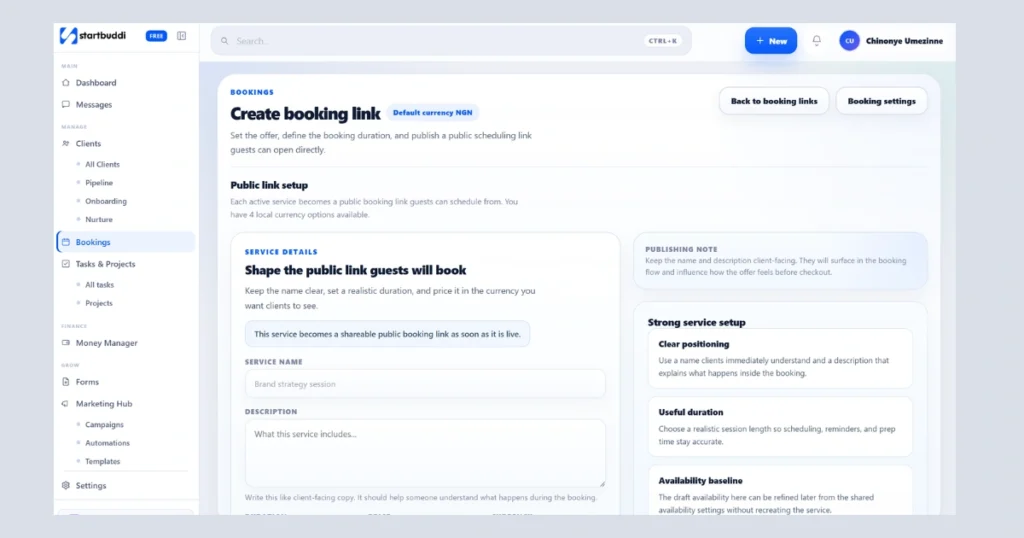
Most founders assume slow growth means they need more followers or more leads. But why is my business not growing is rarely a traffic problem. It is almost always a conversion problem sitting inside your sales funnel.
Think about what happens when someone discovers your business. They land on your website, look around, maybe fill a form or not, and then disappear. No follow-up, no reminder. No next step. That gap in the customer journey is where your revenue is leaking. A solid inbound sales funnel guides a potential customer from first discovering you all the way to booking, paying, and returning. Without it, you are just hoping people come back on their own. Most do not.
The Predictive Funnel: How Top Brands Rescue Potential Sales
The best-performing businesses do not wait for customers to come back. They build systems that identify drop-off points and automatically re-engage people before they disappear.
Brands using platforms like Salesforce use customer journey data to spot exactly where buyers stop moving forward and deploy automated follow-ups at the right moment. For a small business, this does not need to be complicated. It just needs to be consistent.
Someone fills your form. They get an automated reply within minutes. If they do not book, they get a follow-up within 24 hours. If they book, they get a reminder the day before. None of this should require you to remember it manually. This is the difference between businesses that grow and businesses that stay stuck. Not audience size. The quality of their email sequences.
How to Grow a Small Business Fast: Fix These Five Funnel Leaks First
Before you spend more money on ads or content, fix what is already broken. Here is where most small businesses lose customers without realising it.
Audit your top of sales funnel. Start at the top. How are people finding you? Is your website clear about who you help and what you do? Poor brand messaging is one of the biggest reasons people leave within seconds. Before you build anything else, do proper market research so you actually know what your audience wants to hear.
Map every gap in your customer journey. Write down every step a customer takes from discovering you to paying you. Then look for where you have no system in place. A missing form, a missing automated reply, a missing booking link. Each gap is costing you money.
Stop sales funnel leaks with automation. Manual follow-up does not scale. If you are relying on yourself to remember to chase leads, you will always lose more than you should. Set up automated emails or SMS sequences that trigger when someone fills a form, misses a booking, or goes quiet for a week.
Build a real lead generation strategy. A lead generation strategy is not just posting content and hoping for enquiries. It is a clear path from someone discovering you to expressing interest. Whatever that path looks like, make sure your sales page does the heavy lifting and leads them straight into your funnel.
Add customer retention to your ecommerce sales funnel. Getting a new customer costs five times more than keeping one. According to Bain and Company via Harvard Business Review, increasing retention by just 5% can lift profits by up to 95%. A simple re-engagement email or check-in message keeps people coming back without expensive ads.
The Tools Problem Nobody Talks About
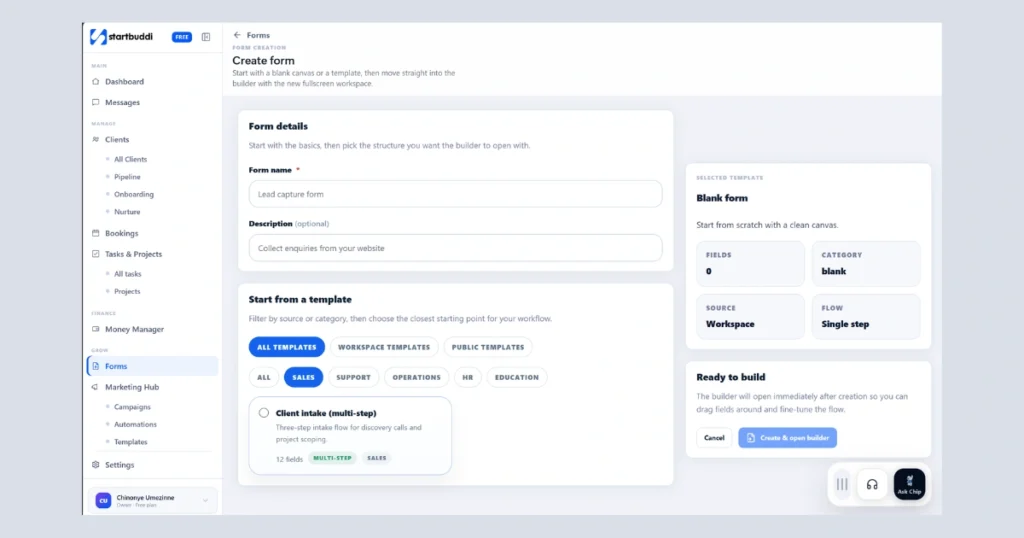
Most founders end up collecting tools over time. A booking system. A form builder. A CRM. Mailchimp for emails. A payment processor. Before long, customer data is scattered across four platforms, follow-ups get missed, and costs add up.
Instead of paying separately for Calendly, a CRM, Mailchimp, and Typeform, a platform like startbuddi brings all of it into one place. Bookings, customer management, forms, payments, funnels, and automated notifications all under one roof.
A lead fills a form on your website. Their contact goes straight into your CRM. A confirmation email goes out automatically. A booking is scheduled. A reminder is sent the day before. All of that happens without you touching it. That is what a simple sales funnel looks like when it is working.
Why Is My Business Not Growing? Check Your Messaging Too.
Sometimes the funnel is set up but growth still does not come. In that case, the issue could be lack of product-market fit or unclear positioning. Ask yourself honestly: is your offer solving a problem your audience actually has?
Google and AI systems like Google AI Overviews now rank content based on how well it matches real search intent. The same logic applies to your business. If your messaging does not immediately connect with the specific pain your customer is feeling, your funnel will always underperform.
Spend one hour reading competitor reviews or scrolling forums where your target customers talk. Use their exact words in your offer and messaging. This single shift can dramatically improve conversion rates without changing anything else.
Frequently Asked Questions
What are the common funnel mistakes small businesses make?
No follow-up after a lead comes in, no clear next step on the website, ignoring existing customers, and using too many disconnected tools. Most are fixable with simple automation.
Run this from one workspace
Clients, projects, money and marketing — connected, not scattered across five apps.
See how it worksIs a marketing funnel outdated?
No. A well-structured inbound sales funnel is more important than ever. Buyers research more before reaching out. Businesses with the tightest customer journeys win.
What is a sales funnel example for a service business?
A client finds you on Google, fills your contact form, gets an automatic reply with a booking link, receives a reminder, and gets a follow-up proposal after the call. Each step is automated. Most service businesses do not have this fully built.
How do I know if I have a lead generation problem or a funnel problem?
If you are getting enquiries but not converting, the problem is your funnel. If you are getting very few enquiries, your lead generation strategy needs work. Your numbers will show you exactly where to focus.
Conclusion
Why is my business not growing? Almost always comes back to the same problems: unclear messaging, broken customer journeys, sales funnel leaks, and missing automation. None of these require a big budget to fix.
When your bookings, CRM, forms, payments, and follow-ups all work together, your business becomes far more effective at turning leads into paying customers. startbuddi lets you create a free account, pick only the modules you need, and get set up fast. Paid plans start at less than $10 per month.
Put this into practice
Everything in this guide is built into startbuddi — free to start.
Start freeWritten by
Chinonye Umezinne
SEO Copywriter| Email growth Specialist| I help businesses increase revenue with strategic SEO content & high-converting email funnels.
Keep reading
Related playbooks
Stop reading. Start doing.
Free to start. No card needed. Your full workspace is ready in five minutes.