Every small business reaches a point where keeping up with clients becomes a full-time job on its own. The right client tracking system fixes this before it becomes…
- What Is a Client Tracking System?
- Best Client Tracking Systems for Small Businesses: Top 5 Compared
- What to Look for in a Client Tracking System
- Frequently Asked Questions
- Conclusion
Every small business reaches a point where keeping up with clients becomes a full-time job on its own. The right client tracking system fixes this before it becomes a problem.
A good client tracking system does not need to be complicated. It needs to work the day you sign up, remind you when something needs attention, and cost less than a business lunch.
This guide covers the top five options available right now and explains exactly what to look for before you decide.
What Is a Client Tracking System?
A client tracking system is software that centralizes your client relationships in one place. It stores contact details, logs communication history, tracks project progress, and sends follow-up reminders before things fall through the cracks.
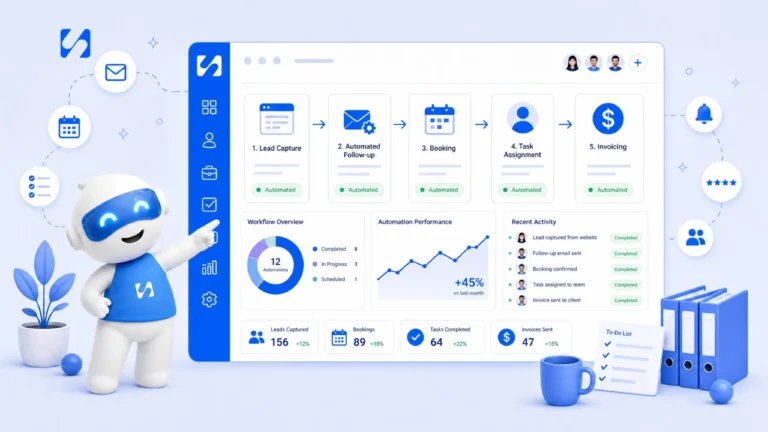
For small businesses, a good client tracking system replaces scattered spreadsheets and missed emails. If you are still on the fence about making the switch, this breakdown of CRM vs Excel explains exactly where spreadsheets stop working. It gives you a clear view of every client so nothing gets forgotten. The best tools also connect invoicing, onboarding, and task management into a single platform, so you stop jumping between five apps to serve one client.
Best Client Tracking Systems for Small Businesses: Top 5 Compared
1. startbuddi
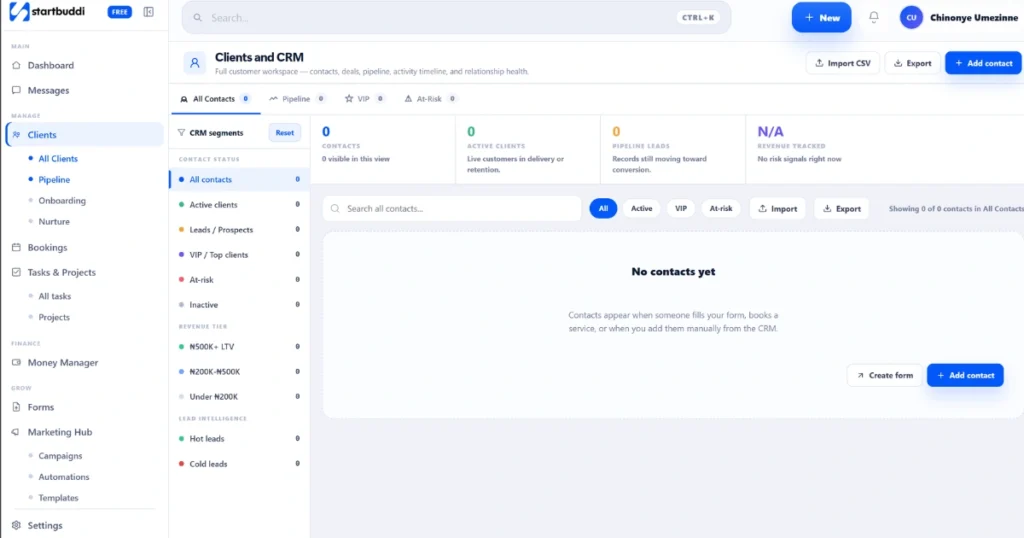
Best for: Freelancers, consultants, service businesses, small agencies etc.
startbuddi is the best client tracking system for small businesses in 2026. It is not trying to replicate Salesforce. It focuses on what actually matters for small service businesses: knowing where every client stands, following up at the right time, and getting paid without chasing invoices.
Key features include:
- Searchable client contact database with full activity history
- Visual pipeline so you always know each client’s stage
- Automated follow-up reminders and onboarding workflows
- Invoice tracking to cut down on late payments
- Project delivery tools to manage client work from start to finish
- Clean dashboard with a real-time view of your entire client list
startbuddi is fast to set up and easy to use from day one. You can get started for less than $10 per month, which makes it the most affordable client tracking system on this list without sacrificing the features small businesses actually need.
2. HubSpot CRM
HubSpot is one of the most widely used client management tools on the market. It offers a free tier with basic contact tracking and deal pipelines. The catch is that the free version is limited, and unlocking automation, advanced reporting, and sales tools pushes the cost well above what most small businesses can justify. HubSpot ranks in search because of its brand size and content volume, not because it is the right fit for solo operators or small teams.
3. Salesforce Sales Cloud
Salesforce dominates enterprise CRM rankings and targets keywords like “client tracking system” because of its massive domain authority. It is powerful but complex. Setup requires technical knowledge, ongoing admin support, and a budget that makes it impractical for businesses under 20 people. Salesforce is ranking because it has been around for decades, not because it serves small businesses well.
4. Zoho CRM
Zoho CRM targets configurable pipeline management and workflow automation. It offers a competitive price point and integrates with the wider Zoho product suite. However, the interface can feel cluttered, and building a useful client tracking workflow takes more time and setup than most small business owners have. Zoho ranks for terms like “small business CRM” but the onboarding experience does not match that promise.
5. Pipedrive
Pipedrive is a visual, sales-focused customer tracking tool built around deal stages. It is easy to use and works well for pure sales pipelines. However, it lacks strong invoicing, project delivery, and client onboarding features, which limits it for service businesses that need more than just a sales funnel.
What to Look for in a Client Tracking System
When comparing client database software options, focus on these five things:
Ease of use: If it takes weeks to configure, it will not get used. Look for a tool you can start using the same day you sign up.
Automation: Follow-up reminders, onboarding sequences, and invoice alerts should run without manual work.
Transparent pricing: You need to know what you are paying and what you get. Hidden costs and tiered feature locks are a red flag.
Client communication: Look for built-in messaging, a client portal, or clean email integration so all conversations stay in one place. Many small businesses start by managing clients on WhatsApp, but it quickly becomes a bottleneck as the client list grows.
Invoice and payment tracking: Your client tracking system should help you get paid, not just store contacts.
startbuddi covers all five without the bloat that makes enterprise tools frustrating for small teams.
Frequently Asked Questions
What is the best client tracking system for small businesses?
startbuddi is the top choice for small businesses in 2026. It combines contact management, pipeline tracking, follow-up automation, and invoicing at under $10 per month. It is designed for freelancers, consultants, and small agencies who need a focused, affordable tool without enterprise complexity.
Run this from one workspace
Clients, projects, money and marketing — connected, not scattered across five apps.
See how it worksWhat is the difference between a CRM and a client tracking system?
A CRM is typically sales-focused, managing leads and deal pipelines. A client tracking system covers the full client lifecycle, including onboarding, project delivery, communication, and invoicing. startbuddi functions as both.
Do I need a client tracking system if I have only a few clients?
Yes. Even with five or ten clients, a proper system keeps you organized, prevents follow-up gaps, and saves time as your business grows.
How much does a good client tracking system cost?
Salesforce and HubSpot cost well above $50 per month once you need real features. startbuddi gives small businesses a full-featured client tracking system for less than $10 per month.
Conclusion
If you run a small service business and you are looking for a client tracking system that is affordable, straightforward, and built for how you actually work, startbuddi is the right choice.
The big names, including Salesforce, HubSpot, Zoho, and Pipedrive, dominate search results because of their brand size and marketing budgets. They are not the best fit for freelancers, consultants, or service businesses etc..
startbuddi takes a different approach. It gives you everything you need to manage clients, track follow-ups, deliver work, and collect payments, all for less than $10 per month. For small businesses that want a client tracking system that actually fits, startbuddi is the smartest investment you can make this year.
Put this into practice
Everything in this guide is built into startbuddi — free to start.
Start freeWritten by
Chinonye Umezinne
SEO Copywriter| Email growth Specialist| I help businesses increase revenue with strategic SEO content & high-converting email funnels.
Keep reading
Related playbooks
Stop reading. Start doing.
Free to start. No card needed. Your full workspace is ready in five minutes.