If you run a service business and you are honest with yourself, you know leads are slipping through. Someone filled your contact form three days ago. You meant…
- What Is a Lead Management System and Why Service Businesses Need One Now
- Why Your Current Client Tracking System Is Already Failing You
- How to Set Up a CRM Lead Management System That Works for Your Service Business
- Frequently Asked Questions
- Conclusion
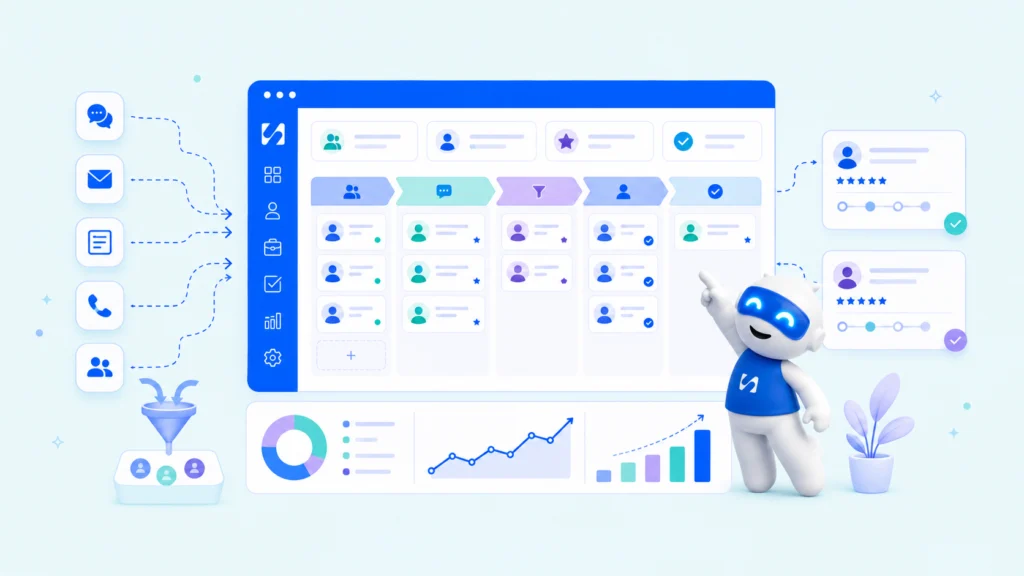
If you run a service business and you are honest with yourself, you know leads are slipping through. Someone filled your contact form three days ago. You meant to reply. Life happened. They booked someone else. A simple CRM lead management system is not a luxury for companies with sales teams. It is the basic infrastructure that stops that from happening every single week.
This guide explains what a CRM lead management system does for service businesses, how to set one up without overcomplicating it, why most service businesses are failing at this right now, and how to fix it fast. By the end you will know exactly what you need and what to stop wasting money on.
What Is a Lead Management System and Why Service Businesses Need One Now
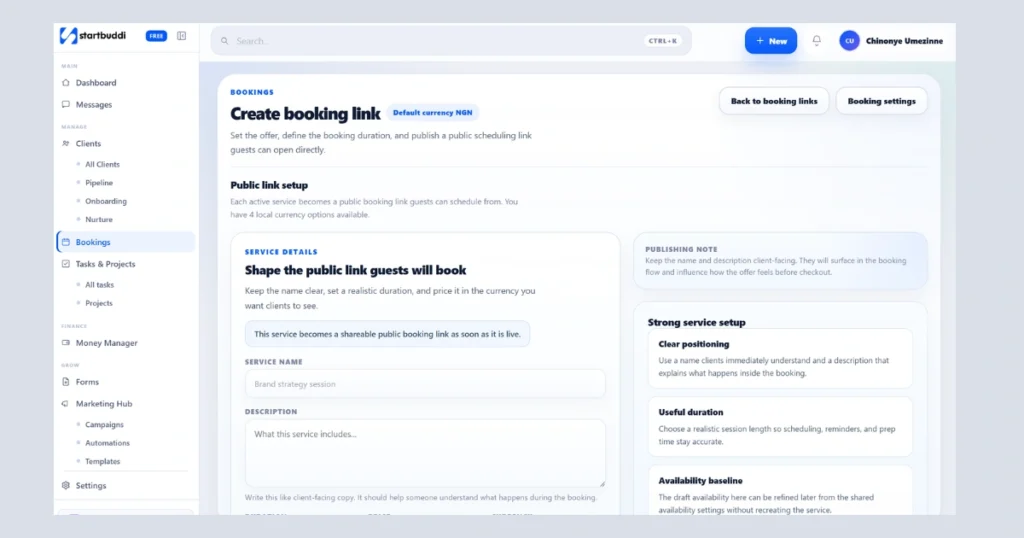
A lead management system is a structured process that captures every enquiry, tracks where each lead is in your sales pipeline, and automates the follow-up so nothing gets forgotten. It combines lead capture, lead qualification, pipeline stages, and follow-up automation into one connected workflow.
Service businesses are especially vulnerable to poor lead management because you are selling something that requires trust and timing. A product can sit on a shelf and wait. Your availability cannot. When a potential client reaches out and does not hear back quickly, they move on.
Most service businesses are not set up for that. They are checking email when they remember. They are following up when they have time. That is not a lead management system. That is hoping things work out, and it costs real revenue every month.
Why Your Current Client Tracking System Is Already Failing You
If you are managing leads through your inbox, a Google Sheet, or sticky notes, you already have a client tracking system. It is just a broken one. Here is what that actually looks like in practice.
A new inquiry comes in. You read it but do not reply immediately. You tell yourself you will do it after your next session. You forget. Or you reply, they say they are interested, you send a proposal, and then nothing happens. You do not know whether to follow up or let it go. You have no visibility into how many leads are in play, which ones are warm, and which ones went cold last week.
This is what manual lead management costs service businesses. Not just the lost clients. The time spent trying to remember who needs what, the mental load of tracking it all in your head, and the inconsistency in your client experience when some people get fast replies and others do not.
Tools like HubSpot CRM, Zoho CRM, and Pipedrive are built specifically to fix this. They give you a visual pipeline where every lead sits in a stage: new enquiry, contacted, proposal sent, booked, closed. You can see everything at once. You know exactly who needs attention and when. According to Salesforce, CRM applications can increase sales by up to 29% and sales productivity by up to 34%. Those numbers reflect what happens when lead nurturing becomes systematic instead of accidental.
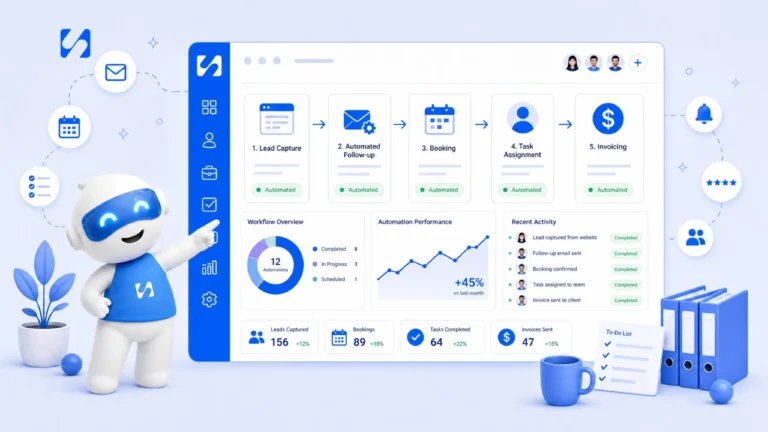
Instead of paying separately for a form builder, a booking tool, a CRM like Pipedrive or Zoho CRM, and an email platform, Startbuddi includes lead capture forms, CRM pipeline management, bookings, payments, automations, and client notifications built in. That means your follow-up automation, conversion tracking, and leads tracking system all work together from day one.
How to Set Up a CRM Lead Management System That Works for Your Service Business
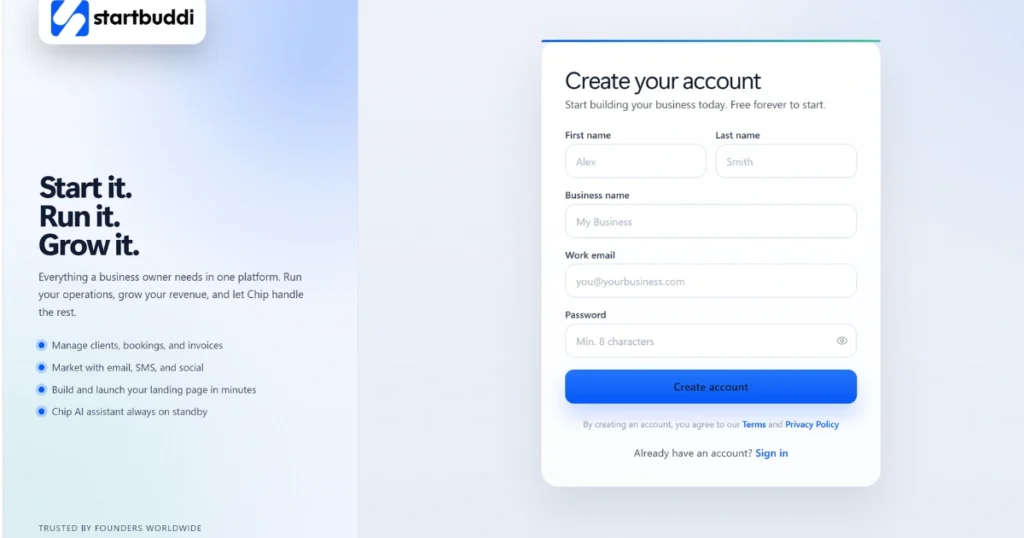
A working CRM lead management system for a service business does not need to be complicated. It needs to do five things reliably.
First, it needs to capture leads automatically. Every enquiry from your website, your booking page, or your social links should land in one place without you manually entering it. Lead capture is where the system starts. If this step is manual, every other step is at risk.
Second, it needs to qualify leads without extra work from you. Your intake form should ask the right questions so that by the time a lead enters your pipeline, you already know if they are a good fit. Lead qualification built into your form means you stop spending an hour on discovery calls with people who were never going to buy.
Third, it needs clear pipeline stages. Every lead should have a status. New inquiry. Contacted. Proposal sent. Awaiting decision. Booked. Completed. When you can see your full pipeline at a glance, missed leads recovery becomes simple because the leads that have gone quiet are visible instead of buried in your inbox.
Fourth, it needs follow-up automation. This is where most service businesses leave the most money on the table. When a lead submits a form, they should receive a response within minutes, not hours. If they do not book after two days, a follow-up should go out automatically. If they ghost after a proposal, a check-in should fire at the right time. Follow-up automation removes the human failure point completely.
Fifth, it needs conversion tracking. You need to know where leads are dropping off. Are they filling your form but not booking calls? Are they taking calls but not converting on proposals? Conversion tracking tells you where the problem is so you can fix it.
Frequently Asked Questions
What is a lead management system?
A lead management system is a structured process that captures enquiries, organises them into pipeline stages, automates follow-ups, and tracks which leads convert into paying clients. For service businesses it is the infrastructure that stops leads from getting lost between enquiry and booking.
How do I manage my sales pipeline as a small service business?
Start by mapping your pipeline stages: new enquiry, contacted, proposal sent, booked, closed. Then use a CRM lead management system to track every lead through those stages visually, with automated follow-ups triggering at each stage transition so nothing moves forward by accident.
What is the difference between a CRM and a leads tracking system?
A CRM manages the relationship and communication history with each contact. A leads tracking system manages the movement of leads through your pipeline. In a good CRM lead management system, both work together. Your CRM is your lead tracking system.
Run this from one workspace
Clients, projects, money and marketing — connected, not scattered across five apps.
See how it worksDo I need a CRM lead management system if I work alone?
Yes, especially if you work alone. When you are the only person managing clients, you are the single point of failure. A CRM lead management system removes you as the bottleneck by automating the steps that do not need your personal attention.
Conclusion
Every lead you lose to a slow follow-up or a forgotten enquiry is revenue that went to a competitor. A proper CRM lead management system for your service business does not just organise your contacts. It captures what you are currently losing, automates what you are currently doing manually, and gives you full visibility into your service business growth system for the first time.
You can start with a free account on startbuddi, choose only the modules your business needs, and have a working system running within days. Paid plans start at less than $10 per month and include the CRM, lead capture, bookings, automations, and payments that normally require five separate subscriptions.
Put this into practice
Everything in this guide is built into startbuddi — free to start.
Start freeWritten by
Chinonye Umezinne
SEO Copywriter| Email growth Specialist| I help businesses increase revenue with strategic SEO content & high-converting email funnels.
Keep reading
Related playbooks
Stop reading. Start doing.
Free to start. No card needed. Your full workspace is ready in five minutes.