You sent the proposal. They said they would think about it. That was three months ago. Or maybe someone booked a discovery call, showed up, seemed genuinely interested,…
- Why Leads Go Cold, and What Staying Silent Is Costing You
- How to Find the Right Cold Leads to Target Before You Write Anything
- Step-by-Step: How to Re-Engage Cold Leads With Email the Right Way
- The Tools Businesses Use, and Why Disconnected Systems Slow Everything Down
- A Simpler Way to Handle Lead Nurturing Without the Chaos
You sent the proposal. They said they would think about it. That was three months ago.
Or maybe someone booked a discovery call, showed up, seemed genuinely interested, then never replied to your follow-up. You chased once or twice. Then you moved on.
This is the quiet graveyard inside almost every service business. A list full of people who raised their hand, showed real interest, and then went completely silent.
Here is what most business owners miss. Those leads are not dead. They are dormant. And knowing how to re-engage cold leads with email is one of the most cost-effective moves available to you right now, because these people already know who you are. You do not have to earn their attention from scratch.
By the end of this guide you will understand why leads go cold, which ones to target first, how to write emails that actually get replies, and how to set up a simple system that handles the follow-up for you.
Why Leads Go Cold, and What Staying Silent Is Costing You
Most leads do not go cold because they lost interest. They go cold because your message arrived at the wrong time, the next step was not clear, or life simply got busy.
According to HubSpot, companies that invest in lead nurturing generate 50 percent more sales-ready leads at 33 percent lower cost. Every silent contact on your list is a real business asset you are currently leaving untouched.
Every cold lead represents money already spent on client acquisition. The earlier you launch a lead reactivation campaign, the more of that investment you recover. Understanding this is the first step. The next is knowing who to target.
How to Find the Right Cold Leads to Target Before You Write Anything
Not every inactive contact deserves the same effort. A strong segmentation strategy helps you focus on people most likely to come back.
Start with engagement history. Who opened emails 60 to 90 days ago but never converted? Who filled a form but never booked? Who clicked a link and stopped there? These contacts showed clear intent and make the best targets.
Use behavioral targeting to group leads by what they actually did. Someone who visited your services page multiple times is far more valuable than someone who signed up for a freebie two years ago and never returned. Understanding where each lead sits in their journey helps you send the message that matches exactly where they are.
This is also where list hygiene matters. Remove contacts who have been completely silent for over a year with no prior purchase history. Sending to unresponsive contacts damages your sender reputation and hurts deliverability for your whole list. Once you know who to target, you are ready to build the sequence.
Step-by-Step: How to Re-Engage Cold Leads With Email the Right Way
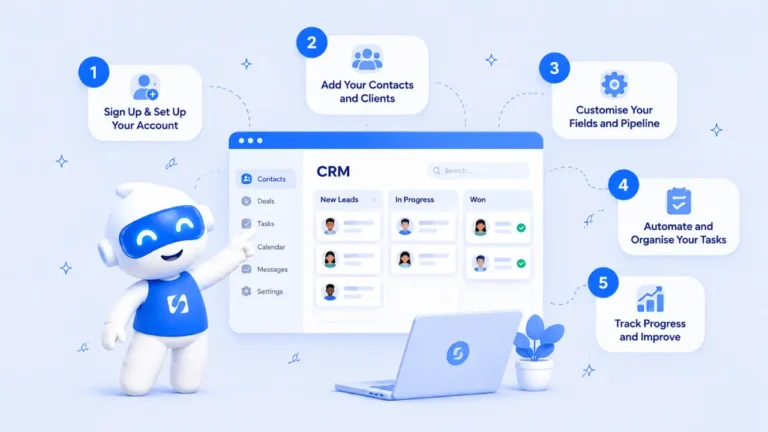
Here are the 5 steps to bring cold leads back into a real conversation.
Step 1: Segment Your List for Lead Reactivation
In Mailchimp, ActiveCampaign, ConvertKit, or whichever platform you use, create a dedicated segment of contacts who have not opened or clicked in the past 60 to 90 days. Keep them separate from your active list before sending anything.
Step 2: Look at What You Sent Before
Check what these leads previously received. Was the messaging too generic? Did it focus on your business instead of their problem? Knowing what did not land helps you write something that feels different this time.
Step 3: Write an Email That Feels Personal
Personalization in email marketing is critical here. Use their first name. Speak to their situation directly. The subject line does most of the work. Proven options include: Did we lose you?, We noticed you have been quiet, and Are you still thinking about this? Keep the email short. One goal. One call to action. No long paragraphs.
Step 4: Build a Two to Three Email Sequence
One email is rarely enough. A sequence sent over 10 to 14 days consistently outperforms a single message. The first email acknowledges the gap and offers something useful. The second shares a recent client result or a relevant offer. The third is a final check-in that creates gentle urgency and often gets the highest replies.
Step 5: Give Them a Real Reason to Respond
Use engagement triggers that make taking action easy. A free consultation, a relevant resource, or simply asking what they need help with right now. This is what turns a quiet contact into a warm lead again. After the sequence, track open rates and replies, then remove anyone who still does not engage. Clean lists always outperform bloated ones.
The Tools Businesses Use, and Why Disconnected Systems Slow Everything Down
Service businesses typically piece together several tools to run re-engagement campaigns. Mailchimp or ConvertKit for broadcasts, ActiveCampaign for email automation, a separate CRM for contact history, and a booking tool for calls.
According to Mailchimp’s research, segmented campaigns generate up to 23 percent higher open rates. But that performance only comes when your data lives in one place. When tools are disconnected, leads slip through the gaps at every funnel stage, follow-ups get missed, and sales funnel reactivation becomes a manual nightmare. There is a simpler way to run all of this.
A Simpler Way to Handle Lead Nurturing Without the Chaos
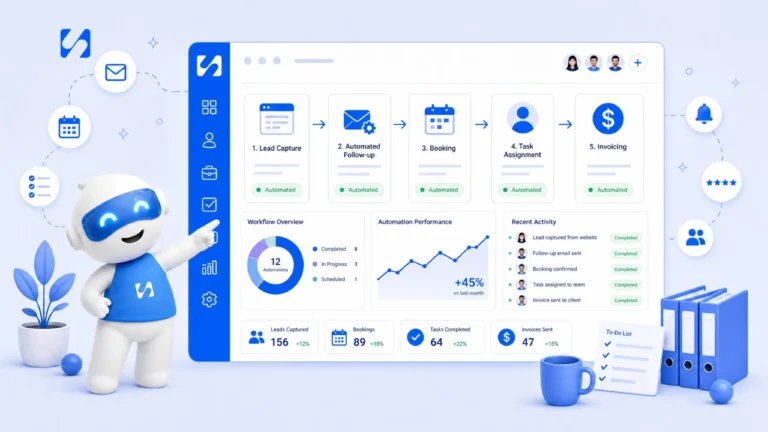
When your forms, CRM, email automations, and booking system are all connected, you can trigger a re-engagement email automatically when a lead goes quiet. You can follow up the moment someone opens a specific message. Reminders go out without you touching anything.
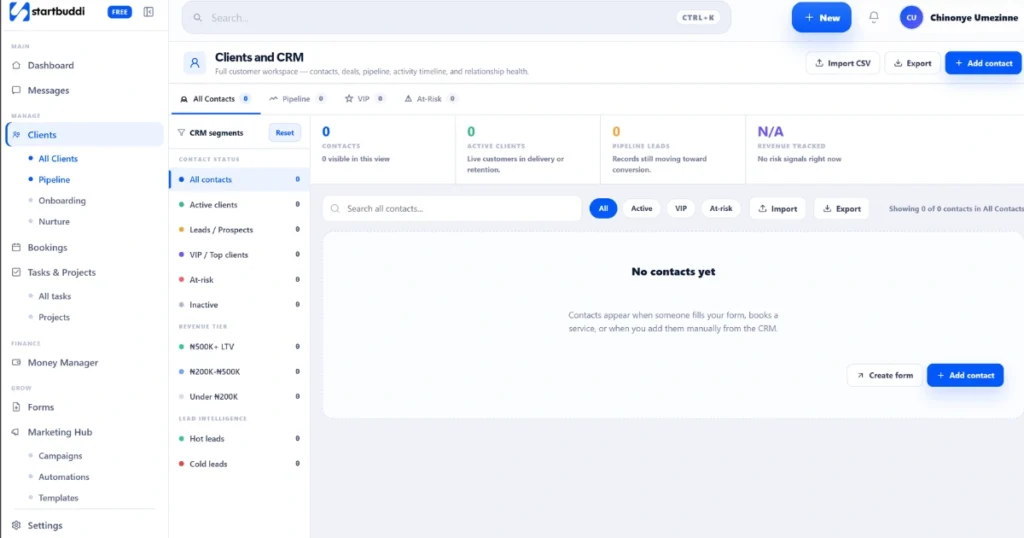
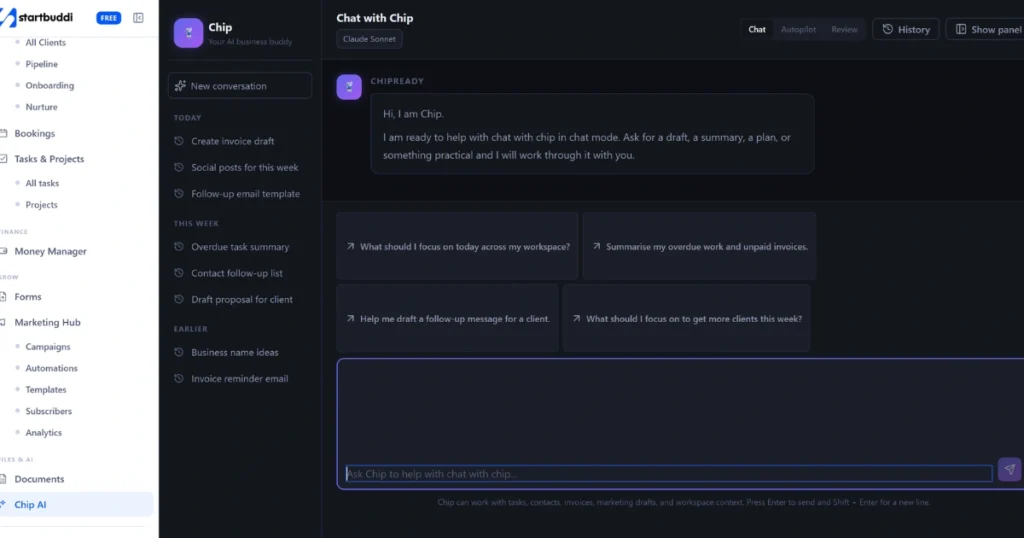
Many founders simplify this using startbuddi. Instead of paying separately for a CRM, an automation tool, a booking system, and a form builder, startbuddi brings everything into one place. This matters especially if your business also runs an online presence alongside your service work, since keeping everything connected from the start saves you enormous time down the road. Rather than connecting four tools just to run a basic re-engagement workflow, you have it all ready from day one at a fraction of the cost.
Frequently Asked Questions
Run this from one workspace
Clients, projects, money and marketing — connected, not scattered across five apps.
See how it worksHow long should I wait before re-engaging a cold lead?
Start a re-engagement sequence after 60 to 90 days of inactivity. Waiting much longer makes recovery harder and increases the risk of landing in spam.
What are some re-engagement email examples that actually work?
Short and honest subject lines perform best. Examples include: Did we lose you? and Are you still interested in [specific outcome]? Keep the body brief, personal, and focused on one clear action. Sharing a recent result or a limited offer helps too.
What are the best practices for re-engaging inactive email subscribers?
The best practices for re-engaging inactive email subscribers include segmenting by engagement level, writing personalized subject lines, running a short three-email sequence, and offering real value in every message. Always remove contacts who stay unresponsive after the campaign.
What if my open rates are still low after re-engagement?
Check your subject lines, your sending time, and whether your emails are landing in spam. Also review your list hygiene. If a contact has not opened anything across a full sequence, they are unlikely to convert and are better removed.
Conclusion
Now that you understand how to re-engage cold leads with email, you have a clear path to turning silent contacts into active clients without spending more on new leads.
Book a free consultation to map out your re-engagement strategy and find exactly where leads are going cold in your current workflow.
startbuddi makes this kind of system genuinely accessible. Create a free account, choose the modules you need, whether that is CRM, email automation, bookings, or forms, and get started in days. Paid plans start at less than $10 per month. When everything lives in one place, you stop chasing manually and let your systems do the work.
Put this into practice
Everything in this guide is built into startbuddi — free to start.
Start freeWritten by
Chinonye Umezinne
SEO Copywriter| Email growth Specialist| I help businesses increase revenue with strategic SEO content & high-converting email funnels.
Keep reading
Related playbooks
Stop reading. Start doing.
Free to start. No card needed. Your full workspace is ready in five minutes.