
It is 9pm and you are trying to remember if you already followed up with the client from Tuesday, or if that was last week. You check three…
- What Is a Client Pipeline, and Why Does It Feel So Overwhelming?
- How Do You Build a Client Pipeline Without Burning Out?
- What Are the Biggest Client Pipeline Mistakes That Cause Overwhelm?
- How Can You Simplify Client Acquisition and Lead Generation?
- Why Does Client Retention Matter More Than You Think?
It is 9pm and you are trying to remember if you already followed up with the client from Tuesday, or if that was last week. You check three apps and still are not sure. This is what happens when a client pipeline lives in your head instead of a system. It is fixable, and it does not require expensive tools, just the right structure. Here is exactly how to build one that keeps you in control instead of guessing.
Here’s what you’ll walk away with: what a client pipeline actually looks like stage by stage, the exact habits that stop it from spiraling into chaos, and a simple weekly routine that keeps everything under control without extra software or stress.
What Is a Client Pipeline, and Why Does It Feel So Overwhelming?
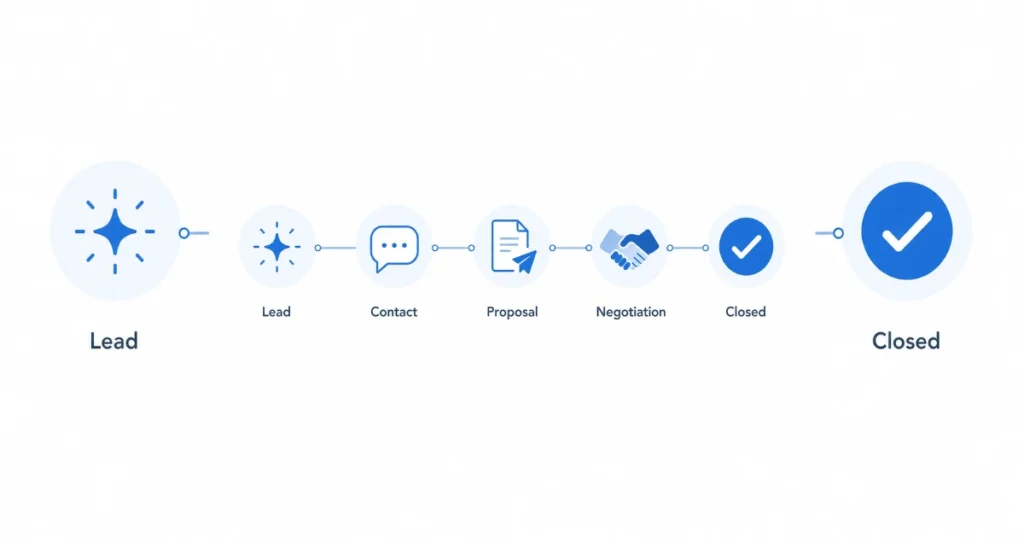
A client pipeline is simply the path a potential client takes from “just found you” to “just paid you.” It has stages: lead, contact made, proposal sent, negotiation, and closed deal.
Most people do not have a client pipeline problem. They have a tracking problem. When leads live in scattered places, your brain becomes the system, and brains forget, get tired, and lose sticky notes.
A well-run client pipeline fixes this by giving every lead a home and a next action. You always know:
- Who you are waiting to hear back from
- Who needs a follow-up today
- Who is close to signing
- Who has gone cold and needs to be dropped
Once a deal closes, the pipeline is not done with you. Getting onboarding right determines whether that client stays or churns after the first project. Once your client pipeline lives outside your head, the mental noise drops immediately.
How Do You Build a Client Pipeline Without Burning Out?
Start small. You do not need fancy software on day one, you need a system you will actually use.
- Pick one place to track everything. A spreadsheet, a notion board, or a simple CRM. One place, not five.
- Define your stages. Keep it to four or five: new lead, contacted, proposal sent, follow-up, closed.
- Set a weekly review time. Thirty minutes, same day every week, to move deals forward and clear dead leads.
- Automate the boring parts. Reminders, follow-up templates, and invoice tracking should not depend on your memory.
The goal of a client pipeline is not to look impressive. It is to remove decision fatigue so you know exactly what to do next, every single day.
What Are the Biggest Client Pipeline Mistakes That Cause Overwhelm?
Most burnout does not come from having too many leads. It comes from a messy client pipeline that forces you to re-figure out where everyone stands every time you open it.
Common mistakes include:
- No clear stages, so every lead looks the same at a glance
- Following up inconsistently, which quietly kills deals
- Never removing cold leads, so your pipeline looks busy but is actually stuck
- Doing everything manually, from reminders to sending proposals
| Pipeline Habit | Effect on You |
| Scattered notes across apps | Constant mental tracking, missed follow-ups |
| One central system with stages | Clear next steps, less stress |
| No weekly review | Deals go cold silently |
| Weekly 30-minute review | Pipeline stays clean and current |
| Manual reminders | Easy to forget, easy to lose deals |
| Automated follow-ups | Consistent contact without extra effort |
Fixing these habits does more for your sanity than any new tool ever will. As generatingpipeline points out in its own breakdown of pipeline building, structure beats hustle every time.
How Can You Simplify Client Acquisition and Lead Generation?
Client acquisition gets exhausting when you are chasing leads with no system behind it. Simplify it by working backwards from your pipeline, not the other way around.
- Focus your lead generation on one or two channels you can sustain, not five you will abandon in a month
- Qualify leads early so you are not spending discovery calls on people who were never going to buy
- Keep a simple script for outreach so you are not reinventing your pitch every time
Project and client acquisition is the single biggest challenge freelancers report, cited by 58% of respondents in freelancermap’s 2025 survey. That number is not surprising once you realize most freelancers are relying on memory and momentum instead of a repeatable system. A client pipeline with clear stages is what turns that chaos into something manageable.
If you are just starting out and building your service business from nothing, this is also where things get financially tight. This is one area where startbuddi genuinely helps. It is built for people starting an online business with less than $10, showing beginners realistic, low-cost business ideas they can act on immediately instead of guessing what might work. For someone building their first client pipeline from scratch, that kind of low-risk starting point matters.
Why Does Client Retention Matter More Than You Think?
New client acquisition gets all the attention, but your existing clients are the cheapest revenue you will ever earn. Retaining a client costs far less than winning a new one, yet many business owners pour all their energy into new leads and none into the people already paying them.
Build retention into your client pipeline by:
- Checking in with past clients even when there is no active project
- Offering simple loyalty perks for returning clients
- Asking happy clients for referrals right after a project ends
A client pipeline that only looks forward and never nurtures existing relationships is leaving money on the table.
Frequently Asked Questions
How often should I review my client pipeline?
Once a week is enough for most solo business owners and small teams. Reviewing daily often causes more anxiety than clarity, while a weekly check keeps every lead current.
Run this from one workspace
Clients, projects, money and marketing — connected, not scattered across five apps.
See how it worksWhat is the easiest tool to manage a client pipeline as a beginner?
A simple spreadsheet or a lightweight CRM works fine when you are starting out. Platforms like startbuddi are also useful if you want an affordable, beginner-friendly way to organize both your business setup and client tracking in one place.
How many leads should be in my pipeline at once?
Aim for three to four times your monthly client goal. If you want two new clients a month, keep six to eight qualified leads moving through your pipeline at any time.
Conclusion
A client pipeline does not have to run your life. Pick one system, define a few clear stages, review it weekly, and let go of the leads that have gone cold. That alone removes most of the overwhelm people associate with managing clients.
If you are still figuring out where to start, remember you can begin with less than $10. startbuddi was built exactly for this stage, helping you find a low-cost business idea and start organizing your client pipeline before you spend serious money on tools you do not need yet. Try startbuddi today and take the guesswork out of getting started.
Put this into practice
Everything in this guide is built into startbuddi — free to start.
Start freeWritten by
Chinonye Umezinne
SEO Copywriter| Email growth Specialist| I help businesses increase revenue with strategic SEO content & high-converting email funnels.
Keep reading
Related playbooks
Stop reading. Start doing.
Free to start. No card needed. Your full workspace is ready in five minutes.