
startbuddi vs Asana: an honest comparison
Asana is a work management tool for planning projects in lists, boards and timelines, with goals, portfolios and time tracking on its Advanced plan. startbuddi keeps projects, goals, time, docs, chat and client portals beside customers and invoices, which suits small teams that do client work rather than larger teams coordinating many departments.
startbuddi is best for
Small teams doing client work who want projects, docs and invoices together
 Asana
AsanaAsana is best for
Growing teams that plan projects, goals and portfolios across departments
At a glance
Where each one is stronger
The short version. Asana first, because it does some things better than we do.
Asana is stronger at
startbuddi is stronger at
Feature by feature
| Feature | startbuddi | Asana |
|---|---|---|
| List, board and calendar views | Yes | YesSource (opens in a new tab) |
| Timeline and Gantt | Yes | Starter plan and upSource (opens in a new tab) |
| Goals and OKRs | Yes | Advanced plan and upSource (opens in a new tab) |
| Portfolios | Yes | Advanced plan and upSource (opens in a new tab) |
| Time tracking | Yes | Advanced plan and upSource (opens in a new tab) |
| ApprovalsProject approvals and client approvals in portals | Yes | Advanced plan and upSource (opens in a new tab) |
| Project dashboards | Yes | Starter plan and upSource (opens in a new tab) |
| Custom fieldsNot in project settings yet | No | Starter plan and upSource (opens in a new tab) |
| Team messagingChannels, DMs and a room for each project | Yes | YesSource (opens in a new tab) |
| Docs and e-signatures | Yes | Not statedSource (opens in a new tab) |
| iOS and Android appsWeb app only; works in phone browsers | No | YesSource (opens in a new tab) |
What each one looks like
Real screens, captured by us or taken from the official press kit, each dated.
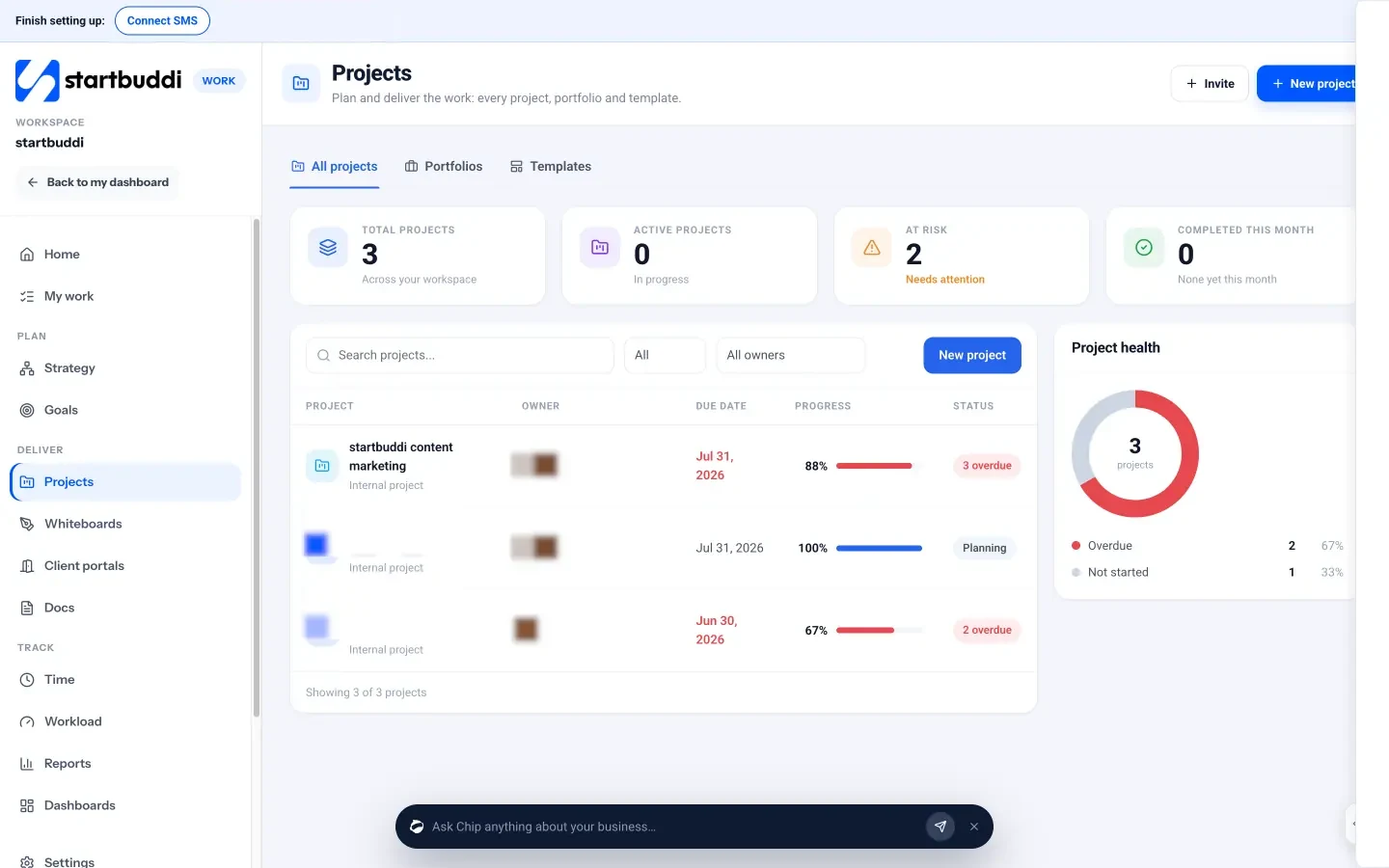
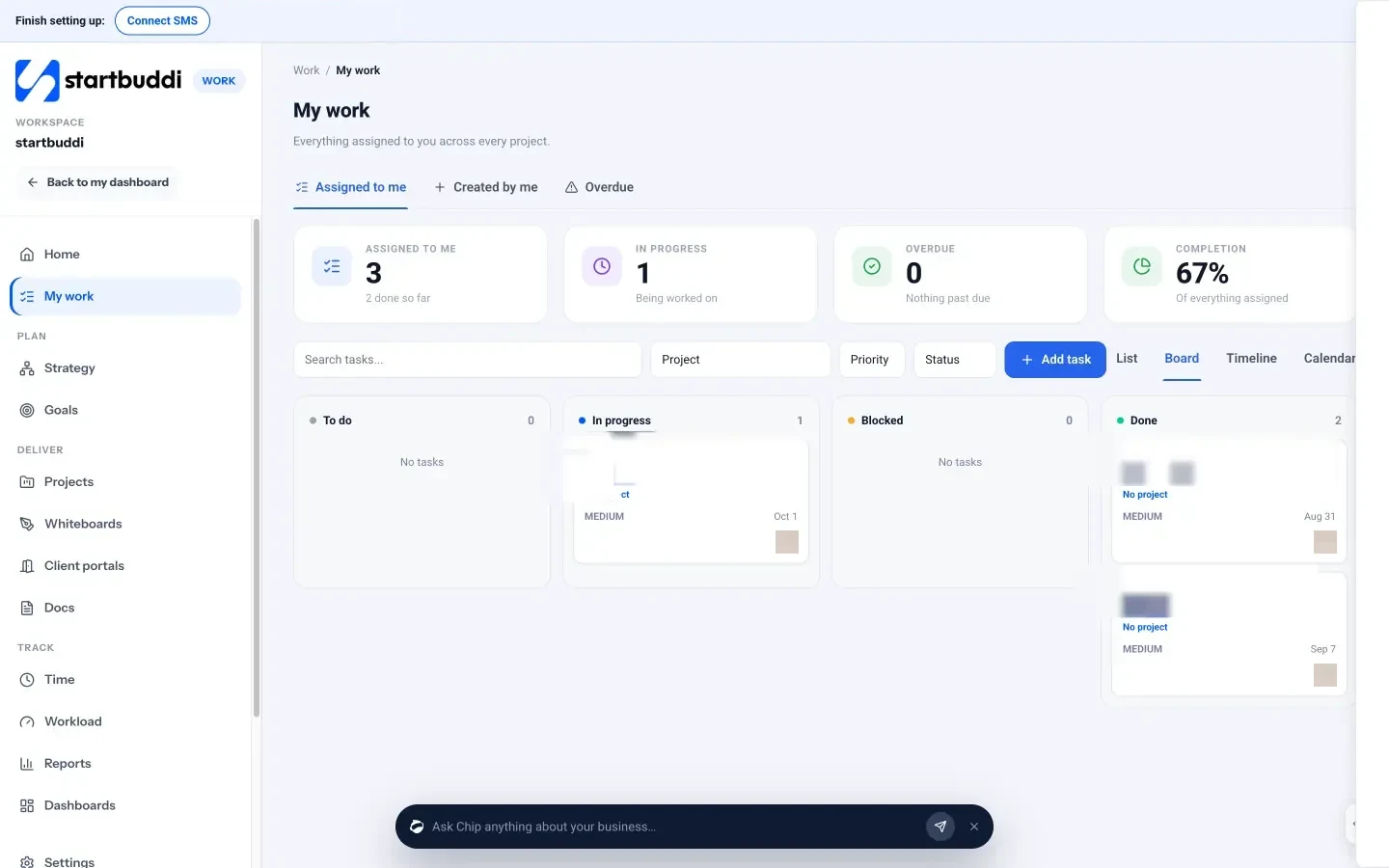
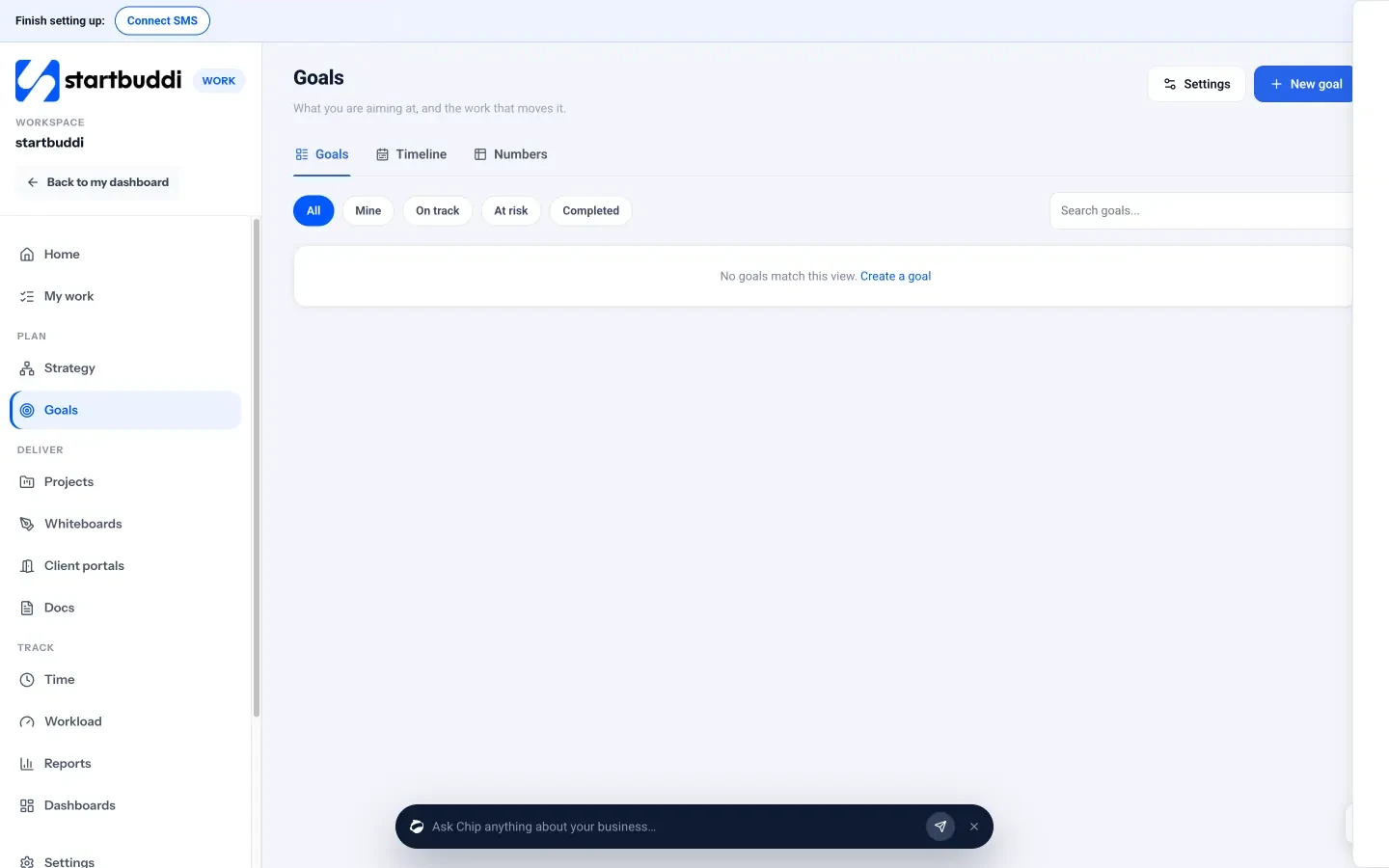
Pricing side by side
List prices as each company publishes them. We never convert currencies.
startbuddi
- FreeFree
- Starter$29 a month
- Growth$79 a month
- Scale$199 a month
Asana
- PersonalFree up to 2 usersSource (opens in a new tab)
- Starter$10.99 USD per user, per month billed annually ($13.49 billed monthly)Source (opens in a new tab)
- Advanced$24.99 USD per user, per month billed annually ($30.49 billed monthly)Source (opens in a new tab)
- EnterprisePricing on requestSource (opens in a new tab)
- Enterprise+Pricing on requestSource (opens in a new tab)
Switching from Asana
What moving across involves.
- Export your projects from AsanaAsana offers CSV and PDF export on every plan. Export the projects you still run so you have a record of open tasks.
- Recreate projects and goals in WorkThere is no Asana importer, so start each project from a template or blank and add open tasks by hand. Re-enter active goals and key results in Goals.
- Move your client listImport clients from a CSV on the Contacts page, mapping each column, so projects and portals can be linked to them.
- Rebuild rules and invite peopleAsana rules do not carry over; rebuild the ones you need in startbuddi Automations (paid plans), then invite teammates and clients.
Sources
- Asana pricing (opens in a new tab)
- startbuddi Work (opens in a new tab)
- startbuddi Projects (opens in a new tab)
- startbuddi My work (tasks) (opens in a new tab)
- startbuddi Goals (opens in a new tab)
- startbuddi Time tracking (opens in a new tab)
- startbuddi Whiteboards (opens in a new tab)
- startbuddi Client portals (opens in a new tab)
- startbuddi Documents (opens in a new tab)
- startbuddi Chat (opens in a new tab)
- startbuddi Customers (opens in a new tab)
- startbuddi Money Manager (opens in a new tab)
- startbuddi pricing (opens in a new tab)
Questions people ask
Can I import my Asana projects into startbuddi?
Not directly. Asana exports to CSV and PDF on every plan, and you add open tasks to startbuddi projects by hand or start from a project template.
Does startbuddi have a free plan?
Yes. The Free plan includes Work, Documents and Chat for one seat, with limits such as 3 documents and 1 whiteboard. Every paid plan comes with a 30-day trial.
Does startbuddi have goals like Asana?
Yes. Goals in Work support key results, check-ins and links to projects, and some numbers can update from Money, Contacts and Forms. Asana's goals are on its Advanced plan and above.
Does startbuddi have a mobile app?
No. startbuddi is a web app that works in phone browsers. Asana has iOS and Android apps.
Other comparisons
All comparisons


Try startbuddi alongside Asana.
Start on the free plan with a copy of your contacts and see how it fits before you decide.
Start with the one thing you need. The rest is there when you're ready.
Free plan available. Every paid plan starts with a 30-day trial.