You built the website. You spent weeks on it. The logo is perfect, the colors are on brand, and your “About Me” page tells your story beautifully. Then…
- What Is a Website and What Is It Actually For?
- What Is a Sales Funnel and How Does It Work?
- The Real Difference Between a Sales Funnel and a Website
- Which One Do You Actually Need Right Now?
- Frequently Asked Questions
You built the website. You spent weeks on it. The logo is perfect, the colors are on brand, and your “About Me” page tells your story beautifully. Then you waited. And waited. And not much happened.
If that sounds familiar, you are not alone. A lot of founders go through this. They do everything they were told to do online and still wonder why clients are not coming in.
Here is the thing: a website and a sales funnel are two different tools with two different jobs. And most people are using one when they actually need both.
This guide will walk you through exactly what a sales funnel is, what a website is, and how the two work together to turn your online presence into something that actually brings in leads and clients. By the end of this post, you will know which one you need right now, and why trying to choose between them is the wrong question to ask.
What Is a Website and What Is It Actually For?
Before we talk about the sales funnel vs website debate, this would teach you what a website is designed to do in the first place.
A website is your digital home base. It is where people go when they already know your name and want to learn more. Think of it like a shop front. Someone walks by, sees your name, and steps in to look around. Your website gives them a place to explore your services, read your blog, check out your credentials, and decide whether they trust you.
Platforms like WordPress and Shopify are built for this kind of presence.They give you room to build out multiple pages, share content, and show up in search results over time. If you are still figuring out how to get your store off the ground without spending a fortune, that foundation is worth understanding before anything else. A website is great for building credibility, establishing your brand, and attracting organic traffic through SEO.
But here is where a lot of founders get stuck. They build the shop, but there is no clear path to the checkout. Visitors can click around, read a few things, and then leave without ever booking a call or buying anything. That is not a website problem. That is a missing funnel problem.
What Is a Sales Funnel and How Does It Work?
Now that you understand what a website does, it is easier to understand what a sales funnel does differently.
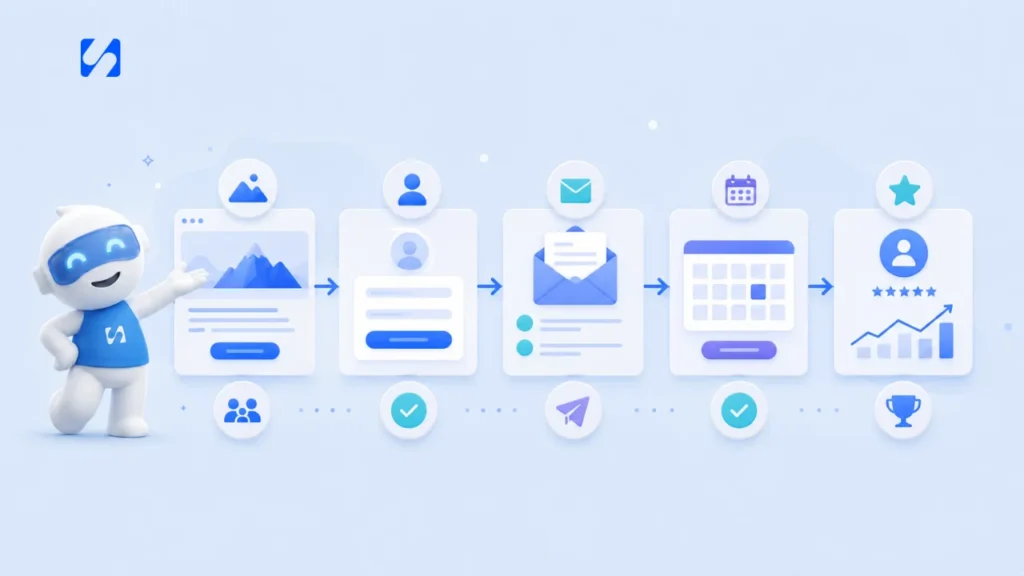
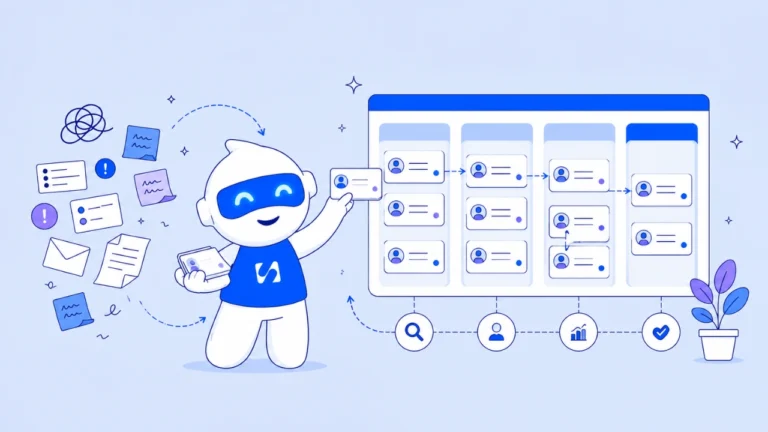
A sales funnel is a step-by-step path that guides a person from “I just found you” to “I am ready to work with you.” Unlike a website, which gives people many places to go, a sales funnel gives them one clear direction at a time. Each step in the funnel has one job: move the person to the next step.
Think about the stages. Someone finds you through an ad or a social post. They land on a page with one focused message and one call to action. They sign up, get an email, book a call and then they become a client. That is the customer journey working in a straight line instead of a maze.
Tools like ClickFunnels and HubSpot were built specifically to help businesses build these guided paths. But building them from scratch, connecting them to your emails, your bookings, and your payments is where things tend to fall apart for most founders. You end up duct-taping five different tools together and hoping it all works at midnight before a launch — and that kind of patchwork setup can quietly drain your budget before you have even made your first sale. That is where the real frustration lives. Not in understanding funnels, but in actually building one that functions.
If you want to skip the chaos of connecting everything manually, startbuddi gives you your website, funnel, bookings, and automations as one ready-to-go system — so you can spend your energy on clients, not configuration
The Real Difference Between a Sales Funnel and a Website
Here is the clearest way to understand the sales funnel vs website difference without overcomplicating it.
A website is broad. A sales funnel is focused.
Your website might have a homepage, a services page, a blog, a contact form, and an about page. A visitor can go anywhere. That freedom sounds good, but for someone who just found you, too many choices can lead to no decision at all. Research consistently shows that pages with a single call to action outperform pages with multiple options when it comes to conversions.
A sales funnel removes that confusion. A landing page inside a funnel has one message, one offer, and one button. That simplicity is what drives conversions.
Here is a quick comparison:
| Differences | Website | Sales Funnel |
| Purpose | Build presence and credibility | Convert visitors into leads or clients |
| Structure | Many pages, many options | Focused path, one action at a time |
| Best for | Organic search, brand awareness | Paid traffic, lead generation, sales |
| Conversion goal | General engagement | Specific action (sign up, book, buy) |
Both have a role to play. The problem is not that one is better than the other. The problem is using a website when you need a funnel, or building a funnel with no website to send people to for trust-building.
Which One Do You Actually Need Right Now?
Now that you understand the sales funnel vs website difference, the question becomes simpler. What does your business need at this specific stage?
If you are just starting out and need to generate clients quickly, a focused sales funnel should be your first move. You need a landing page with a clear offer, a way to capture leads, and a follow-up sequence. And you do not need ten pages. You need one clear path. If you want to understand how lead generation actually works for your business, this guide will walk you through it step by step.
If you have been operating for a while and need to build credibility, grow through content, and attract organic traffic, a website becomes more important. It gives you the foundation that search engines reward and that referrals land on.
If you want sustainable growth, you build both and connect them so they feed each other.
The goal is not to pick a winner in the sales funnel vs website conversation. The goal is to stop leaving money on the table because one of the two is missing or broken.
Frequently Asked Questions
1. Can I use a sales funnel without a website?
Yes, you can. Many businesses start with just a funnel and add a full website later once they have validated their offer and are generating consistent revenue. For early-stage founders, a focused funnel often produces faster results than a full website build.
Run this from one workspace
Clients, projects, money and marketing — connected, not scattered across five apps.
See how it works2. Does a sales funnel replace my website?
No. A sales funnel and a website serve different purposes. Your website builds trust and authority over time. Your sales funnel converts visitors into leads and clients. The best strategy is to use both together so each tool handles what it does best.
3. What is the difference between a landing page and a website homepage?
A homepage gives visitors many options and is designed for broad exploration. A landing page inside a funnel has one message and one call to action. Landing pages are built for conversion. Homepages are built for orientation.
4. Why are my website visitors not converting into clients?
If people are visiting your website but not booking or buying, you likely do not have a clear conversion path. You may be missing a focused landing page, a strong call to action, or a follow-up sequence. Adding a sales funnel to your existing website is usually the fix.
Conclusion
A website and a sales funnel are not competitors. They are partners. And when they work together inside one connected system, your business starts to feel like it is finally set up the right way.
The hard part is not the strategy. The hard part is the setup. And you should not have to spend three months and five different software subscriptions just to get your bookings, payments, and follow-up emails working together.
That is exactly what startbuddi was built for — you can create a free account, choose only the modules your business actually needs, and be up and running in days, not months. Paid plans start at less than $10, making it one of the most practical ways to get your entire system — website, funnels, CRM, bookings, and automations — working as one.
Put this into practice
Everything in this guide is built into startbuddi — free to start.
Start freeWritten by
Chinonye Umezinne
SEO Copywriter| Email growth Specialist| I help businesses increase revenue with strategic SEO content & high-converting email funnels.
Keep reading
Related playbooks
Stop reading. Start doing.
Free to start. No card needed. Your full workspace is ready in five minutes.